
Charles L. Thomas
The Stand At Climbach
James G. Fausone
In the early decades of the twentieth century, the trajectory of countless African American families bent northward. Drawn by the promise of industrial work, better pay and a measure of social mobility, they left behind the rigid constraints of the Jim Crow South for cities like Detroit. Among them was the family of Charles Leroy Thomas, born April 17, 1920, in Birmingham, Alabama.
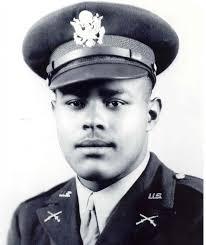
His father, Horace Thomas, was a veteran of World War I – a man who had already tested the paradox of fighting for a country that denied him full citizenship. That experience left a quiet but powerful imprint on the household. Discipline, duty, and resilience were not abstract ideals; they were lived expectations. When the family relocated to Detroit during the Great Migration, they carried those values with them into a city defined by smokestacks, assembly lines, and possibility. Detroit in the 1930s was both a proving ground and a crucible. For Black families, it offered employment – often grueling, frequently discriminatory, but steady. The Thomas family settled into this environment with determination.
Charles attended Cass Technical High School, then one of the city’s premier institutions, known for producing technically proficient graduates ready to feed into Detroit’s industrial economy.
At Cass Tech, Thomas distinguished himself through precision. He gravitated toward mechanical systems, tools, and the logic of engineered solutions. Upon graduation in 1938, he stepped directly into the industrial world, working like his father at the Ford Motor Company’s River Rouge Plant. In the 1930s, Henry Ford’s River Rouge Plant in Dearborn, Michigan, was not just a factory; it was the largest industrial complex in the world and the ultimate monument to “vertical integration.” Raw materials, such as rubber and iron ore, go into one end and automobiles come out the other. While the 1920s saw its rise, the 1930s were defined by the Rouge’s absolute dominance in manufacturing and its role as a flashpoint for the American labor movement. It was the Cathedral of Industry and the foundation of what would become the Arsenal of Democracy.
There, amid the roar of furnaces and the rhythm of production lines, Thomas developed both physical endurance and a methodical mindset. Yet he did not stop there. He enrolled at Wayne State University to study mechanical engineering. This decision placed him within a narrow but growing cohort of Black Americans pursuing technical education – a pathway that required persistence in the face of structural barriers. His life, at this stage, reflected a clear arc: discipline at home, skill in industry, and ambition in education.
That arc would soon intersect with global war.
Into Uniform: A Segregated Army
The United States entered World War II after the attack on Pearl Harbor in December 1941. Like millions of young men, Thomas was drawn into the expanding military apparatus. Interrupting his education, Thomas was drafted on January 20, 1942, reporting to Fort Custer, Michigan.
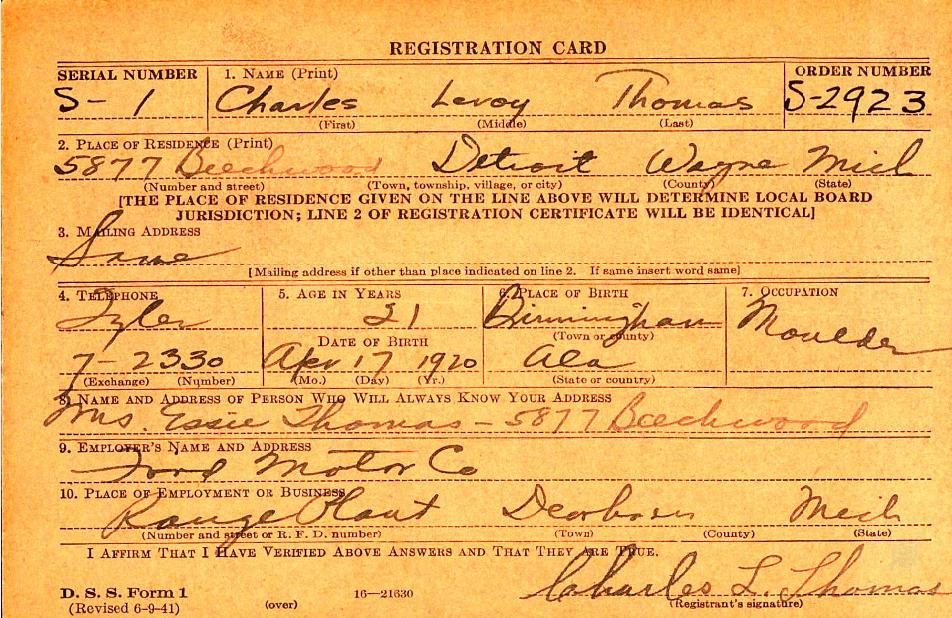
The Army he entered was segregated. African American soldiers were organized into separate units, often led by white officers and frequently assigned to support roles. Yet the war’s scale and intensity gradually forced the Army to expand opportunities, particularly in specialized branches.
Thomas began in the infantry but quickly demonstrated leadership potential. He was selected for Officer Candidate School – a notable achievement given the systemic barriers of the time – and earned his commission as a second lieutenant in 1943.
He was assigned to the 614th Tank Destroyer Battalion, an African American unit formed under a relatively new doctrine. Tank destroyers were conceived as mobile anti-armor forces, designed to counter German panzer formations through speed, positioning, and concentrated firepower. The concept emphasized initiative and aggressive maneuver – traits that aligned closely with Thomas’s temperament.
Training took place at Camp Wolters, Texas, and later at Camp Carson, Colorado. These installations provided not only technical instruction but also a testing ground for leadership under pressure. Thomas developed into an officer who led from the front, attentive to both tactical detail and the morale of his men.
By 1944, the battalion deployed to the European Theater of Operations. The war in Western Europe had entered a brutal phase. After the Allied landings in Normandy and the subsequent breakout across France, American forces pressed toward the German border. Resistance stiffened as they approached the Siegfried Line – a dense system of fortifications designed to shield the Reich.
It was in this environment that Thomas would define his legacy.
December 14, 1944: Climbach, France
The village of Climbach lay in northeastern France, near the German border. By December 1944, it was part of a contested zone where advancing Allied units encountered increasingly determined German defenses. The terrain – rolling, wooded, and interspersed with fortified positions – favored German defenders.
On December 14, 1944, First Lieutenant Charles L. Thomas was assigned to lead a column of armored and reconnaissance vehicles tasked with advancing toward enemy positions near Climbach. His role was not merely to advance but to probe – to locate, identify, and, if necessary, draw enemy fire.
It was a dangerous assignment by design.
Thomas later reflected on the mission with understated clarity: he had been sent forward to “locate and draw the enemy fire.” What he encountered exceeded even those expectations.
As his column moved forward, it entered a zone of intense German resistance. Artillery fire erupted with precision, joined by machine guns and self-propelled weapons. The lead element – Thomas’s element – became the focal point of the attack.
His M20 scout car, lightly armored and designed for speed rather than protection, was quickly targeted. The opening barrage inflicted severe casualties and left the vehicle disabled. Thomas himself was struck multiple times, suffering serious wounds.
At that moment, the situation could easily have devolved into chaos. A disabled lead vehicle under heavy fire often signals a stalled advance, disorientation, and mounting casualties. Leadership becomes the decisive variable.
Despite his injuries, he remained conscious and fully engaged. The young First Lieutenant did not relinquish command. Thomas directed his driver to reposition what remained of the vehicle, attempting to provide cover for dismounting troops. He issued orders to halt the column, preventing additional vehicles from advancing blindly into the kill zone. His actions bought time – time for his unit to reassess, reorganize, and respond.
Even as his condition deteriorated, Thomas continued to communicate. He relayed information about enemy positions, coordinated return fire, and ensured that command continuity was preserved. His refusal to be evacuated until he had stabilized the situation exemplified a specific form of battlefield leadership: sustained command under catastrophic conditions.
Eventually, weakened by blood loss, he was evacuated. But by then, the immediate crisis had been managed. The unit, though battered, retained cohesion and operational capability. From a tactical perspective, Thomas’s stand achieved several critical outcomes:(i) It exposed the location and intensity of German defensive fire; (ii) It prevented the rest of the column from advancing into a prepared ambush; and (iii) It maintained unit cohesion at a moment when fragmentation was likely. These are not abstract achievements. In combat, such factors often determine whether a mission collapses or adapts.
The Shadow of a Larger Battle
Just two days after the action at Climbach, German forces launched a massive counteroffensive through the Ardennes – the Battle of the Bulge. This operation would become one of the most studied and commemorated battles of the war.
In that context, the events at Climbach receded into relative obscurity. Yet they were part of the same operational landscape: a contested frontier where both sides probed, tested, and prepared for larger engagements.
Thomas’s actions occurred at the edge of that storm. His stand did not shape the broader strategic narrative, but it exemplified the localized intensity that defined the campaign.
Thomas continued his military career after the war, eventually attaining the rank of major before retiring in 1947. He returned to civilian life, carrying with him both the recognition he had received and the recognition he had not.
The Long Road to Recognition:
Race, Review, and the Medal Upgrade
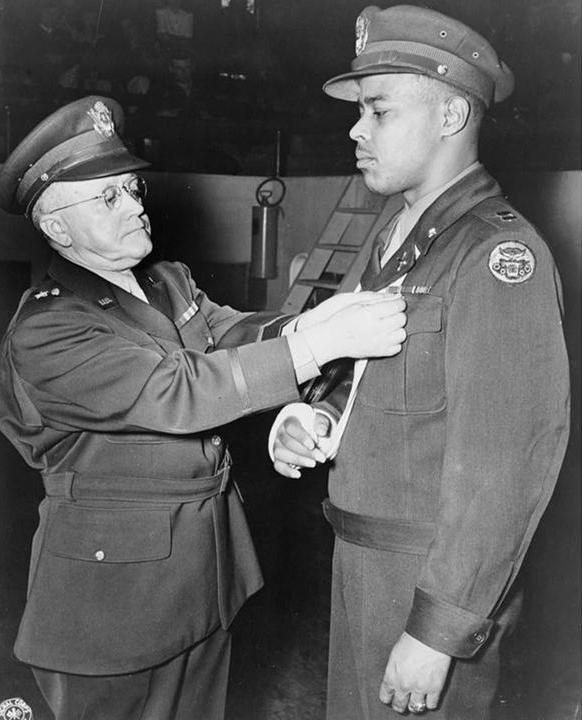
In 1945, Thomas was awarded the Distinguished Service Cross, the Army’s second-highest decoration for valor. At the time, it represented formal acknowledgment of extraordinary heroism. This was a high recognition for a Black soldier at the time. Yet it was not the Medal of Honor.
During World War II, no African American soldiers received the nation’s highest military decoration, despite numerous documented acts of valor. Historians and later investigations would identify systemic racial bias in the awards process as a significant factor.
In the early 1990s, it was determined that Black soldiers had been denied consideration for the Medal of Honor (MOH) in World War II because of their race. In 1993, the U.S. Army had contracted Shaw University in North Carolina to research and determine if there was racial disparity in the review process for recipients of the MOH. The study commissioned by the U.S. Army, described systematic racial discrimination in the criteria for awarding decorations during World War II. After an exhaustive review of files, the study recommended in 1996 that ten Black Americans who served in World War II be awarded the MOH.
The awards process during World War II was heavily dependent on chain-of-command endorsements, eyewitness statements, and officer recommendations. In a segregated military, where African American units were often led by white officers and operated within racially biased institutional frameworks, this system introduced multiple points where prejudice – whether overt or implicit – could influence outcomes. Recommendations could be downgraded, delayed, or never initiated. Language used in citations could be softened. Acts that might have resulted in the Medal of Honor for white soldiers were, in many cases, recognized at lower levels for Black servicemen.
In October of that year, Congress passed legislation that would allow President Clinton to award the Medal of Honor to these former soldiers. Seven of the ten, including Thomas, were approved and awarded the MOH. On January 13, 1997, President Clinton presented the MOH to the seven Black Americans; Major Thomas and five others were posthumously presented the MOH. Thomas had died in 1980 never aware of the medal review. A niece of Thomas accepted his MOH during the ceremony.
Thomas’s Distinguished Service Cross fit this pattern. The narrative of his actions – leading from the front, sustaining command after severe wounds, preserving his unit under devastating fire – aligned with established criteria for the Medal of Honor. Yet at the time, it was categorized one tier below. There is no single document that explicitly states the decision was racially motivated. Instead, the evidence emerges in aggregate: patterns across cases, disparities in recognition, and the broader context of segregation.
The upgrade of Thomas’s award was more than an administrative correction. It represented an institutional acknowledgment that the original decision-making process had been flawed—not necessarily in its documentation of valor, but in its final judgment. It also underscored a broader principle: that military honor, while rooted in individual action, is mediated through human systems that are not immune to bias.
For historians and military professionals, the implications are significant. The case of Charles L. Thomas demonstrates that valor is constant, but recognition is contingent. It depends on who observes, who reports, and who decides. When those processes are shaped by inequity, the historical record itself becomes distorted.
Correcting that record does not change what happened on December 14, 1944. Thomas’s leadership, his wounds, and his refusal to relinquish command remain exactly as they were. What changes is the lens through which those actions are understood – and the level of honor formally attached to them.
In that sense, the 1997 Medal of Honor is both retrospective and forward-looking. It honors a single officer’s conduct under fire, while also signaling a commitment – however delayed – to a more equitable standard of recognition.
The Medal of Honor Citation
The Medal of Honor citation for Major Charles L. Thomas reads as follows:
For conspicuous gallantry and intrepidity at the risk of his life above and beyond the call of duty on 14 December 1944, near Climbach, France. First Lieutenant Charles L. Thomas, Company C, 614th Tank Destroyer Battalion, distinguished himself while leading a column of armored vehicles in an attack against enemy positions. Fully aware of the extreme danger, he volunteered to lead the column in the face of intense enemy fire. As the column advanced, it was subjected to heavy artillery, self-propelled gun, and small arms fire. His vehicle was hit and disabled, and he was seriously wounded. Despite his wounds, he continued to direct the action of his unit, issuing orders and maintaining control under intense fire. His leadership enabled the remainder of the column to withdraw to more favorable positions and reorganize. First Lieutenant Thomas refused evacuation until he had ensured that command was maintained and the situation stabilized. His extraordinary heroism and devotion to duty are in keeping with the highest traditions of military service and reflect great credit upon himself, his unit, and the United States Army.
Life After War
After leaving the Army, Thomas returned to Michigan, where he built a civilian life that reflected his technical background and disciplined approach. His Distinguished Service Cross earned him no special privileges in a Civilian world still race-based.
Thomas’s post-military trajectory followed a logical extension of his prewar and wartime experiences. With a background in mechanical engineering studies and practical industrial work at Ford’s River Rouge Plant, he was well-positioned for technically oriented roles.
He secured employment as a missile technician at Selfridge Air Force Base in Michigan. This role placed him within the emerging infrastructure of Cold War defense. Missile technology in the late 1940s and 1950s was a rapidly evolving field, requiring precision, reliability, and adherence to strict procedural standards – qualities Thomas had demonstrated throughout his military service.
This phase of his career reflects an important continuity: Thomas remained engaged in national defense, albeit in a non-combat capacity, contributing to the technological backbone of U.S. military readiness. The government made a point of hiring veterans and Thomas had all the skill and aptitude for this type of position.
Marriage and Family Life
In 1949, Thomas married and began building a family. He and his wife had two children, establishing a household that mirrored the aspirations of many returning veterans: stability, upward mobility, and opportunity for the next generation.
He settled in the Detroit, Michigan area, remaining close to the community that had shaped his upbringing. During the 1950s and 1960s, this region was home to a growing African American middle class – families who had secured steady employment in industry or government and were carving out space in neighborhoods that were gradually, though often contentiously, integrating.
At some point in the 1950s or early 1960s, Thomas made a notable career transition: he became a computer programmer with the Internal Revenue Service (IRS).
This shift is significant. Computing in that era was still in its formative stages. Programmers worked with punch card systems; early mainframe computers and low-level programming languages and machine logic. The field required analytical thinking, patience, and precision – traits consistent with Thomas’s earlier engineering and military background.
His move into programming suggests both adaptability and intellectual discipline. Many individuals trained in mechanical or industrial systems found it difficult to transition into computing, which demanded a different kind of abstraction. Thomas’s ability to do says a lot about him and indicates a capacity to evolve alongside technological change.
Working for the IRS also placed him within the federal civil service, offering good pay, a steady workflow, benefits and a pension. In effect, Thomas’s postwar career bridged two eras of American technology: from industrial manufacturing and early missile systems to digital computing.
Thomas’s adult life unfolded during a period of profound social change, particularly for African Americans in cities like Detroit.
Final Years and Death
Thomas continued his civilian career and family life into the late 1970s. He remained in Michigan, rooted in the region that had defined his identity since youth. The average life expectancy of a Black male born in 1920 was only 45. Thomas died of cancer on February 15, 1980, at the age of 59. He was laid to rest at Westlawn Cemetery in Wayne, Michigan and is marked by a simple gravestone.
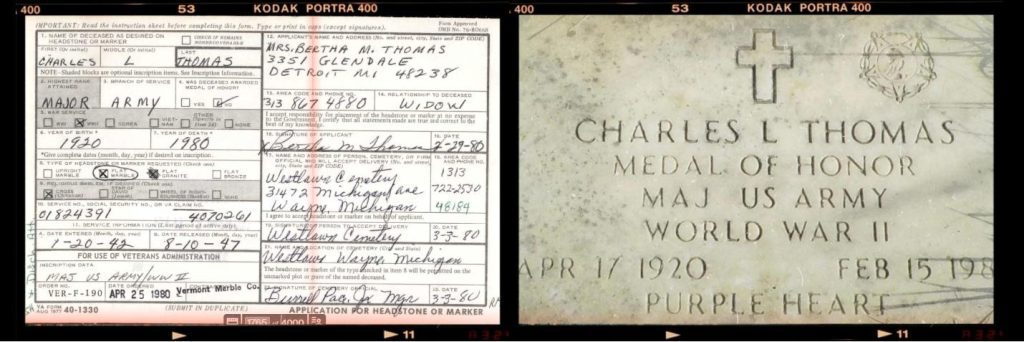
At the time of his death, his wartime heroism was formally recognized but not fully elevated to its eventual status. The Medal of Honor upgrade would come 17 years later, in 1997, as part of the broader review addressing racial disparities in military awards. His Medal of Honor is in the Michigan Heroes Museum in Frankenmuth Michigan.
About James G. Fausone, Esq.
James G. Fausone, Esq. is a partner with Legal Help For Veterans, PLLC, with over twenty years of experience helping veterans apply for service-connected disability benefits and starting their claims, appealing VA decisions, and filing claims for an increased disability rating so veterans can receive a higher level of benefits.
If you were denied service connection or benefits for any service-connected disease, our firm can help. We can also put you and your family in touch with other critical resources to ensure you receive the treatment you deserve.
Give us a call at (800) 693-4800 or visit us online at www.LegalHelpForVeterans.com.
This electronic book is available for free download and printing from www.homeofheroes.com. You may print and distribute in quantity for all non-profit, and educational purposes.
Copyright © 2018 by Legal Help for Veterans, PLLC
ALL RIGHTS RESERVED