
Gordon Douglas Yntema
A Holland, Michigan Son
James G. Fausone
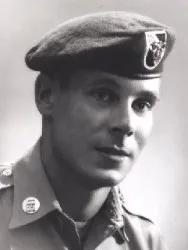
(Photo Courtesy of C. Douglas Sterner)
One of the most heroic military figures lost to modern society. Gordon Douglas Yntema, a quiet young man from Holland, Michigan, whose courage during three days of desperate combat in Vietnam earned the nation’s highest military decoration—the Medal of Honor. His story is not merely one of battlefield heroism. It is also the story of a close-knit Dutch-American family, an upbringing rooted in faith and education, a commitment to excellence, and a young husband and father who willingly accepted the burdens of one of America’s most dangerous military professions.
When Sergeant Gordon D. Yntema was killed on January 18, 1968, at just twenty-five years of age, he left behind a wife, two small daughters, grieving parents, countless friends, and fellow Green Berets who never forgot the extraordinary leadership he displayed under impossible circumstances. Although his life was tragically brief, it reflected many of the qualities long associated with western Michigan: humility, discipline, perseverance, and an unwavering sense of duty.
Dutch Roots in Western Michigan
Gordon Douglas Yntema was born on June 26, 1942, in Holland, Michigan, a community founded by Dutch immigrants along the eastern shore of Lake Michigan. During the early twentieth century, Holland had become known for its strong religious traditions, excellent schools, and emphasis on civic responsibility. The city’s residents valued education, hard work, and service—qualities that profoundly shaped the young Gordon.
The Yntema family reflected those traditions. His father, Dwight A. Yntema, enjoyed a distinguished academic career and served as a professor at Hope College, one of Michigan’s oldest liberal arts institutions. As an educator, Dwight believed that intellectual discipline and moral character were inseparable. Students remembered him as thoughtful, patient, and deeply committed to preparing young people for lives of leadership and service.
Gordon’s mother, Cynthia (Cindy) Yntema, provided the emotional foundation of the household. Friends described the family as close, supportive, and deeply involved in church and community life. Gordon grew up in an environment where honesty, humility, and personal responsibility were expected rather than merely encouraged.
Unlike many future combat heroes whose childhoods were marked by hardship or instability, Gordon experienced a loving and intellectually stimulating upbringing. Yet those advantages never produced arrogance. Instead, family members remembered him as quiet, respectful, and modest. These characteristics would later become hallmarks of his leadership style in Special Forces.
Growing Up in Holland
During Gordon’s childhood, Holland remained a picturesque Midwestern community where children could safely ride bicycles across town, play organized sports, and spend summers along Lake Michigan.
He enjoyed the outdoors from an early age. Fishing, hiking, camping, and athletic competition all appealed to him. Friends recalled a young man who preferred action over attention. He was not interested in becoming the center of conversation, yet people naturally gravitated toward him because of his calm confidence.
Teachers observed similar qualities. Although academically capable, Gordon rarely sought recognition. Instead, he demonstrated quiet determination, completing difficult assignments without complaint while encouraging classmates around him. His parents encouraged curiosity rather than competition.
Dinner conversations often revolved around literature, history, current events, and world affairs. Dwight believed education extended beyond the classroom, exposing Gordon to ideas that broadened his understanding of leadership and responsibility. These conversations were not typical American chats, but what you may expect from a house headed by a professor.
These experiences would later prove invaluable as an Army Special Forces advisor working alongside foreign soldiers whose culture differed dramatically from his own.
Culver Military Academy
Recognizing Gordon’s maturity and leadership potential, his parents enrolled him at the prestigious Culver Military Academy in Indiana.
Founded in the nineteenth century, Culver had earned a national reputation for developing disciplined young leaders through rigorous academics combined with military structure. For Gordon, the academy proved transformative. Life at Culver demanded punctuality, physical fitness, attention to detail, and accountability. Cadets learned that leadership meant accepting responsibility before receiving authority. Gordon flourished in this environment.
He demonstrated excellent physical conditioning while developing confidence in leading other young men through increasingly challenging responsibilities.
More importantly, Culver reinforced several principles that remained with him throughout life discipline begins with self-control; leaders share hardship with those they command; character matters more than reputation; and courage often means remaining calm while others panic. These lessons would later become evident during his final battle.
Fountain Valley School
After time at Culver, Gordon continued his prep education at the Fountain Valley School in Colorado. Located near Colorado Springs and surrounded by mountains, the school emphasized intellectual independence alongside outdoor adventure.
The dramatic landscape appealed to Gordon’s adventurous nature. The ranch acreage setting provide a real western feel and culture. Students regularly participated in hiking expeditions, climbing, camping, and wilderness challenges. These experiences developed physical endurance while encouraging teamwork and problem-solving under difficult conditions.
The rugged environment also introduced him to the American West, where self-reliance and resilience remained essential virtues. Although few could have predicted it at the time, those wilderness experiences helped prepare him for the jungles, swamps, and rice paddies of Southeast Asia.
Choosing the Army
Like many young Americans during the early 1960s, Gordon stood at a crossroads. He possessed the academic credentials necessary for numerous professional careers. His father’s example pointed toward education, yet Gordon felt drawn elsewhere.
The Cold War dominated international affairs, and America increasingly found itself confronting communist expansion across the globe. Gordon believed military service represented an honorable calling.
Rather than waiting to be drafted, he chose to enlist in the United States Army. It was a deliberate decision. Friends later noted that Gordon wanted challenge rather than comfort. He sought an occupation where leadership carried genuine consequences. The Army offered precisely that opportunity.
Basic Combat Training transformed civilians into soldiers through weeks of relentless physical and mental conditioning. Gordon adapted quickly. His previous military education at Culver and Fountain Valley gave him an advantage in drill, discipline, and organization. Instructors soon recognized another quality that distinguished him. Whether under physical exhaustion or intense criticism, Gordon rarely displayed frustration. Instead, he focused on solving problems and helping fellow recruits succeed.
Airborne School
After completing basic training, Gordon volunteered for Airborne training again challenging himself. Paratroopers represented the Army’s elite infantry. Graduating required mastering parachute operations while demonstrating courage and confidence.
Many first-time jumpers experienced understandable anxiety standing inside aircraft before their initial leap. Gordon embraced the challenge. Successfully earning Airborne wings confirmed both his physical ability and willingness to undertake hazardous assignments.
More importantly, volunteering for airborne service reflected an emerging pattern. Whenever offered a difficult path or an easier alternative, Gordon consistently chose the harder road.
Ranger Training
Following airborne qualification, Gordon pursued Ranger training – another challenge. Army Rangers emphasized aggressive leadership, small-unit tactics, endurance, and independent decision-making.
Training proved exhausting. Sleep deprivation, long-distance marches, live-fire exercises, and complex tactical problems pushed candidates beyond perceived physical limits. Gordon excelled because he possessed exceptional mental resilience.
Rather than viewing hardship as punishment, he accepted it as preparation. That mindset impressed instructors and fellow soldiers alike.
Becoming a Green Beret
Although Airborne and Ranger service represented significant accomplishments, Gordon sought an even greater challenge. He volunteered for the United States Army Special Forces. During the early 1960s, Special Forces remained a relatively small organization built around highly trained soldiers capable of operating independently behind enemy lines.
Green Berets needed far more than physical strength. They were mastering foreign weapons, demolitions, unconventional warfare concepts, counter insurgency and understanding foreign cultures and affairs. Training emphasized adaptability rather than rigid procedures. Upon earning the coveted Green Beret, he joined one of the Army’s most respected organizations.
Marriage and Family
Amid his starting his military career, Gordon also experienced another milestone. In 1963, he married Peggy Brown, beginning a partnership built upon love, mutual respect, and shared sacrifice. Military life placed enormous burdens upon young families. Frequent moves, lengthy deployments, uncertainty, and prolonged separations became routine.
Peggy accepted those realities knowing Gordon believed deeply in his profession. Together they welcomed two daughters. Gordon was a devoted father who cherished time at home. Photographs from the period show a smiling young family that reflected optimism common among many military households during the early 1960s.
Like countless American servicemen, Gordon balanced two powerful commitments. One belonged to the family. The other belonged to the country. Eventually those commitments would collide in heartbreaking fashion.
The Dominican Republic
Before Vietnam, Gordon gained valuable operational experience during the 1965 intervention in the Dominican Republic. Political instability threatened to plunge the Caribbean nation into civil war, prompting the United States to deploy forces to restore order and protect American citizens.
The mission exposed Gordon to real-world military operations beyond training exercises. Unlike conventional battlefield campaigns, the Dominican Republic required soldiers to navigate complex political and humanitarian circumstances while exercising restraint. Special Forces personnel frequently interacted with local civilians, military leaders, and government officials. These experiences sharpened Gordon’s diplomatic abilities.
He learned that modern warfare demanded patience as much as aggression. Building trust often proved more important than destroying enemy forces. Those lessons would later become central to his work in Vietnam.
Assignment to the 5th Special Forces Group
By 1967, American involvement in Vietnam had expanded dramatically. Among the Army’s most heavily committed units stood the 5th Special Forces Group (Airborne). Its Green Berets advised indigenous forces throughout South Vietnam while conducting reconnaissance, training, and combat operations in remote regions inaccessible to conventional units.
Gordon received an assignment to Company D, Detachment A-431. His destination lay deep within the Mekong Delta. Unlike the mountainous terrain associated with much of Vietnam, the Delta presented an entirely different battlefield of canals, rice paddies, and swamps. Enemy fighters often blended seamlessly into surrounding villages before disappearing into dense foliage. It was precisely the type of environment where Special Forces advisors played a critical role.
Camp Cai Cai
Gordon’s operational base became Camp Cai Cai, located near the Cambodian border. The isolated Special Forces camp served as headquarters for hundreds of Civilian Irregular Defense Group (CIDG) troops—local South Vietnamese fighters trained and led by a handful of American Green Berets.
The mission extended well beyond combat. Green Berets trained village defenders, organized patrols, improved local security, gathered intelligence, and attempted to disrupt enemy infiltration routes moving from Cambodia into South Vietnam.
Success depended upon relationships. American advisors lived alongside their Vietnamese counterparts, sharing dangers and hardships every day. Gordon quickly earned respect among the CIDG soldiers. His leadership style remained consistent with everything he had learned throughout life. He never demanded risks he refused to share. He remained calm during crises. He led by example.
A Gathering Storm
By late 1967, intelligence reports indicated that enemy activity throughout the Mekong Delta was increasing dramatically. North Vietnamese Army units and Viet Cong formations were moving into positions in preparation for what would become the massive Tet Offensive of early 1968. Although few Americans yet understood the scale of the coming campaign, experienced Special Forces advisors sensed growing danger.
Within weeks, Gordon Douglas Yntema would face the greatest test of his life. The quiet professor’s son from Holland, Michigan, who had spent his youth learning discipline in classrooms, military academies, and training fields, would soon demonstrate extraordinary courage under fire. His final battle would become one of the most remarkable actions in the history of the U.S. Army Special Forces and ultimately earn him the Medal of Honor.
By January 1968, Sergeant Gordon Douglas Yntema had become exactly the kind of soldier the United States Army hoped every Green Beret would be. Calm under pressure, physically tough, intellectually
disciplined, and deeply respected by both Americans and the Vietnamese soldiers he advised, he embodied the Special Forces motto, “De Oppresso Liber”—”To Free the Oppressed.”
He had spent years preparing for the moment when his leadership would be tested. For three days, Gordon Yntema fought against overwhelming enemy forces, repeatedly exposing himself to enemy fire to save the lives of others. His final actions became one of the finest examples of courage in the history of the U.S. Army Special Forces.
Vietnam on the Eve of Tet
By early 1968, American commanders believed the war in Vietnam had reached a favorable turning point. Large U.S. formations had inflicted heavy casualties on communist forces during 1967, and public statements suggested that victory was becoming increasingly attainable.
Unknown to most Americans, however, the North Vietnamese Army and the Viet Cong were preparing an enormous, coordinated offensive. The coming Tet Offensive would strike cities, military installations, and provincial capitals throughout South Vietnam. Although the attacks would ultimately prove a military disaster for communist forces, they fundamentally altered American public opinion regarding the war.
Weeks before the famous urban battles began, however, isolated Special Forces camps found themselves under increasing pressure. Camp Cai Cai was one of them. Located near the Cambodian border in the marshy Mekong Delta, Cai Cai occupied strategically important ground along enemy infiltration routes. The camp’s mission was to train and advise Civilian Irregular Defense Group (CIDG) troops recruited from the local population.
Unlike conventional infantry units, the handful of Green Berets assigned there acted as advisors, trainers, planners, and combat leaders simultaneously. When large enemy formations appeared, there would be no nearby American battalion rushing to their aid. They would largely be on their own.
A Dangerous Patrol
On January 16, 1968, Sergeant Yntema led approximately forty CIDG soldiers on what initially appeared to be a routine combat patrol. The mission involved searching suspected enemy positions near Cai Cai while disrupting infiltration routes through the surrounding countryside.
Instead, the patrol unexpectedly encountered a much larger enemy force. The Americans and their Vietnamese allies soon realized they had stumbled into an organized North Vietnamese Army formation numbering several hundred troops.
The firefight erupted almost immediately. Enemy machine guns opened from concealed positions. Automatic weapons fire swept across open rice paddies. Mortars began exploding around the patrol. Rather than retreat in confusion, Yntema rapidly organized defensive positions while directing accurate return fire.
His calm leadership prevented panic during the opening moments of the engagement. That composure would become critical as the situation deteriorated.
Holding the Line
Enemy forces attempted to surround the patrol. Realizing withdrawal would become increasingly difficult if his force remained stationary, Yntema organized fighting withdrawals while personally moving from position to position.
Throughout the battle he repeatedly exposed himself to enemy fire. Witnesses later recalled that he refused to remain under cover while directing his men. Instead, he physically moved between fighting positions, encouraging wounded soldiers, redistributing ammunition, correcting fields of fire, and identifying enemy movements.
His leadership inspired extraordinary confidence among the CIDG troops. Many had limited formal military training. Seeing their American advisor remain composed under intense fire steadied their own resolve. Whenever morale began wavering, Yntema appeared where danger proved greatest.
Refusing to Leave the Wounded
As casualties mounted, Yntema made a series of decisions that revealed his character. Rather than abandoning wounded soldiers during withdrawal, he repeatedly returned through enemy fire to rescue them. Each rescue exposed him to almost certain death. He ignored the danger. One after another, he dragged injured men to safer positions while continuing to direct defensive fire. Military historians often note that battlefield heroism rarely consists of one dramatic act. Instead, it involves dozens of small decisions.
Each time Gordon Yntema left cover, he consciously accepted another opportunity to die so that someone else might live. Those decisions accumulated throughout the three-day engagement.
Calling for Air Support
Enemy numerical superiority continued increasing. Yntema recognized conventional ground maneuver alone would not save the patrol. Using his radio under intense enemy fire, he coordinated supporting aircraft despite rapidly changing battlefield conditions.
Calling close air support required remarkable precision. Friendly and enemy forces occupied dangerously close positions. Errors could easily result in American aircraft striking their own troops. Yntema calmly adjusted fire while simultaneously coordinating movement among his CIDG soldiers. His professional competence kept supporting fires effective without causing catastrophic friendly casualties.
Throughout Special Forces training, instructors repeatedly emphasized one principle: Advisors cannot ask indigenous soldiers to accept risks they refuse themselves. Gordon Yntema exemplified that philosophy. Rather than remaining behind protected positions issuing orders, he continually fought alongside the Vietnamese troops he advised.
Several surviving CIDG soldiers later credited Yntema with preventing complete collapse during the engagement. His bravery became contagious. During the battle, Yntema was shot and wounded. Rather than requesting evacuation, he refused treatment until other casualties had been cared for.
Such decisions reflected the quiet leadership style that had characterized his military career from the beginning. Even after being wounded, he continued directing movement and organizing defensive positions. His determination convinced many around him that survival remained possible despite overwhelming odds.
The Final Stand
By January 18th, the patrol had endured nearly three days of continuous combat. Exhaustion affected everyone. Ammunition had become scarce.
Enemy pressure intensified. Yntema nevertheless continued leading. As communist forces launched another determined assault, he deliberately exposed himself while directing defensive fire. He moved among scattered defensive positions encouraging his exhausted men.
At one point he again left cover to assist fellow soldiers caught in exposed terrain. While doing so, he was struck by devastating enemy fire, causing what would be mortal wounds. Witnesses recalled that he continued attempting to direct the defense until he could no longer do so. His actions gave surviving members of the patrol precious time to reorganize and withdraw. Many of those men believed they survived only because Gordon Yntema chose to remain exposed while they escaped. He was twenty-five years old.
The Medal of Honor
Military investigations into the battle quickly concluded that Sergeant Gordon Douglas Yntema’s actions far exceeded the requirements for any lesser decoration. His conduct represented conspicuous gallantry at the risk of his own life above and beyond the call of duty.
President Richard Nixon posthumously awarded Gordon Yntema the Medal of Honor on December 7, 1970. His widow, Peggy Yntema, accepted the medal on behalf of her husband during a White House ceremony—a solemn occasion marked by both pride and profound loss.
Medal of Honor Citation
The following is Sergeant Gordon Douglas Yntema’s official Medal of Honor citation:
For conspicuous gallantry and intrepidity at the risk of his life above and beyond the call of duty while serving as an advisor with a Civilian Irregular Defense Group company. Sergeant Gordon D. Yntema distinguished himself by extraordinary heroism during combat operations against an armed hostile force in the Republic of Vietnam.
When his patrol came under intense attack from a numerically superior enemy force, Sergeant Yntema repeatedly exposed himself to heavy hostile fire while directing his men into effective defensive positions. Throughout the prolonged engagement he continually moved through enemy fire to encourage his troops, distribute ammunition, direct supporting fires, and evacuate wounded personnel.
Although wounded himself, he repeatedly refused medical treatment and continued leading the defense. His fearless actions inspired the Vietnamese soldiers under his command to continue resisting overwhelming enemy assaults. Sergeant Yntema’s extraordinary heroism, indomitable fighting spirit, and complete devotion to duty were in keeping with the highest traditions of the military service and reflect great credit upon himself, his unit, and the United States Army.
The citation, while concise, cannot fully convey the chaos and violence of those three days. Those who survived understood that its understated language represented acts of courage repeated again and again under conditions where death was almost certain.
Bringing Him Home
Like thousands of Americans killed during the Vietnam War, Gordon Yntema’s remains were returned to the United States. His funeral brought together family members, fellow soldiers, friends from Holland, Michigan, and members of the broader community.
For his parents Dwight and Cynthia Yntema, the loss was almost unimaginable. Their son had grown from a thoughtful student into one of America’s finest soldiers. His death left an irreplaceable void, yet his courage became a source of lasting pride.
His wife, Peggy, faced the difficult task of raising their daughters, Elizabeth and Jane, without the husband and father whose future had been taken far too soon.
Her grace in accepting the Medal of Honor reflected the quiet strength shared by so many military families who bore the hidden costs of war.
Remembering Gordon Yntema
Within the U.S. Army Special Forces Regiment, Gordon Yntema occupies a place of enduring honor. Young Green Berets continue to study his actions as an example of effective combat leadership.
His story reinforces several timeless principles:
- Leaders share danger.
- Courage is contagious.
- Calmness under fire saves lives.
- Mission accomplishment never excuses abandoning comrades.
These lessons remain as relevant to today’s Special Forces soldiers as they were in Vietnam.
A Michigan Hero
Michigan has produced hundreds of Medal of Honor recipients since the Civil War.
Among them, Gordon Yntema stands out because his heroism reflected not only physical bravery but also intellectual preparation and moral character. His life demonstrated that exceptional warriors are often shaped long before they enter combat. The discipline was learned at home. The people of Holland continue to remember him not simply as a Medal of Honor recipient but as a hometown son who never forgot the values that defined his community.
Legacy
More than half a century after his death, Sergeant Gordon Douglas Yntema remains one of the most admired figures in the history of the Green Berets. His Medal of Honor represents only part of that legacy. His true legacy lies in the example he left behind—a leader who consistently chose responsibility over comfort, service over recognition, and sacrifice over self-preservation.
For historians, he represents one of the finest examples of Special Forces leadership during the Vietnam War. For Michigan, he remains a proud son whose character reflected the best traditions of his community. For the Army, he symbolizes the enduring ideals of the Noncommissioned Officer Corps: competence, courage, and unwavering devotion to those entrusted to his care. For his family, he will always be remembered first as a beloved son, husband, and father whose life ended far too soon but whose influence continues to span generations.
In the final analysis, Gordon Yntema did not become a hero because he wore the Medal of Honor. He wore the Medal of Honor because, when confronted with overwhelming danger, he repeatedly chose the welfare of others over his own life. That decision—made not once but over the course of three relentless days of combat—ensured that his name would forever stand among the most distinguished soldiers in American history.
About James G. Fausone, Esq.
James G. Fausone, Esq. is a partner with Legal Help For Veterans, PLLC, with over twenty years of experience helping veterans apply for service-connected disability benefits and starting their claims, appealing VA decisions, and filing claims for an increased disability rating so veterans can receive a higher level of benefits.
If you were denied service connection or benefits for any service-connected disease, our firm can help. We can also put you and your family in touch with other critical resources to ensure you receive the treatment you deserve.
Give us a call at (800) 693-4800 or visit us online at www.LegalHelpForVeterans.com.
This electronic book is available for free download and printing from www.homeofheroes.com. You may print and distribute in quantity for all non-profit, and educational purposes.
Copyright © 2018 by Legal Help for Veterans, PLLC
ALL RIGHTS RESERVED