
Byron Mac Cutcheon
Orphan, Scholar, Soldier
James G. Fausone
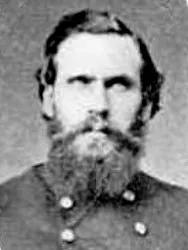
Among the distinguished Medal of Honor recipients associated with Michigan, few led a life as remarkable and multifaceted as Byron Mac Cutcheon. Rising from poverty and orphanhood in rural New Hampshire, Cutcheon became an educator, Civil War hero, attorney, congressman, author, and national public servant. His story reflects the opportunities and challenges of nineteenth-century America and demonstrates how determination, education, and courage could transform an impoverished boy into one of Michigan’s most respected public figures.
Early Life: From Orphan to Scholar
Byron Mac Cutcheon was born on May 11, 1836, in Pembroke, New Hampshire, the son of James M. Cutcheon and Hannah Tripp Cutcheon. His childhood was marked by tragedy. Both of his parents died while he was still young, leaving him an orphan at an age when most children depended entirely upon family support. Rather than surrender to hardship, young Byron developed a determination and work ethic that would define the rest of his life.
To support himself, he worked in a cotton mill in Pembroke. The labor was demanding and offered little prospect of advancement, but Cutcheon viewed it as a means to an end. He used his earnings to obtain an education, understanding that learning represented his best path out of poverty. At thirteen years old he enrolled in Pembroke Academy, where his intellectual abilities and determination quickly became apparent.
His academic success was so impressive that by the age of seventeen he was teaching at the same academy where he had once been a student. This achievement demonstrated not only his scholarly aptitude but also his maturity and leadership. Teaching provided income while allowing him to continue his own studies. The experience would later prove invaluable and be repeated later in life.
Journey to Michigan
In 1855, at the age of 19, Cutcheon moved west to Michigan seeking greater opportunities. Like many ambitious young Americans of the era, he viewed the rapidly growing Midwest as a land of promise. He settled in Ypsilanti, a community already developing a reputation for education and intellectual life. There he continued both teaching and studying.
In 1855, Michigan was a rapidly expanding frontier state on the brink of an industrial and agricultural boom. It had been granted statehood in June 1837 becoming the 26th state. It was not the wild west, but the population was exploding—jumping to just under 750,000 by 1860—as settlers flocked to the state for cheap, abundant land.
The year 1855 was a major turning point for Michigan’s economy and culture. The completion of the Soo Locks at Sault Ste. Marie was a monumental engineering feat. It allowed ships to bypass the rapids of the St. Marys River, connecting the copper and iron riches of the Upper Peninsula directly to the Great Lakes shipping routes. Also, the U.S. government signed the Treaty of Detroit with the Odawa and Ojibwe Nations. This treaty changed large communal reservations to allotting specific tracts of land (40 to 80 acres) to Native individuals and families. This treaty opened up large acreages for development.
Michigan became a pioneer in education. The Agricultural College of the State of Michigan (now Michigan State University) was founded, becoming the very first land-grant university in the United States. Additionally, the University of Michigan, founded in 1917, became one of the first in the country to issue Bachelor of Science degrees.
A massive anti-slavery movement swept the state. Just a year prior in 1854, antislavery Democrats, Whigs, and Free-Soilers gathered in Jackson, Michigan, to officially establish the Republican Party. This political shift would heavily dictate the state’s ideology for the next 80 years.
Cutcheon knew Michigan was a state on the rise and he could advance his educational career rapidly. In 1857 he became principal of Birmingham Academy in Oakland County. Although the position brought prestige and responsibility, Cutcheon considered it only a steppingstone toward his ultimate goal of earning a university education. He carefully saved money from his salary and in 1858 enrolled at the University of Michigan.
Financing higher education remained difficult. To support himself, he alternated between attending classes and teaching. During one period he served as principal of Oak Grove Academy in Lenawee County, accumulating sufficient funds to continue his studies. Through persistence and sacrifice, he completed his collegiate education and graduated from the University of Michigan in 1861.
Even before graduation, Cutcheon had established himself as an educator of considerable ability. He became principal and instructor at Ypsilanti High School, teaching ancient languages, higher mathematics, and moral philosophy. His intellectual accomplishments suggested a future devoted to education and scholarship. However, events unfolding across the nation would soon alter the course of his life.
Answering Lincoln’s Call
The outbreak of the Civil War in 1861 transformed the lives of countless Americans. Like many educated young men in the North, Cutcheon, then 25 years old, believed preservation of the Union was a sacred duty. In 1862, when President Lincoln called for additional volunteers, the young educator set aside his academic career and entered military service.
Cutcheon helped organize a company for the 20th Michigan Infantry Regiment and entered service as a second lieutenant. His natural leadership abilities quickly became evident. Within weeks he was promoted to captain, and by October 1862 he had risen to the rank of major. Such rapid advancement reflected the confidence his superiors placed in his intelligence, discipline, and courage.
The 20th Michigan Infantry participated in several important campaigns. Cutcheon saw action at Fredericksburg, Kentucky and Tennessee operations, the Knoxville Campaign, and numerous engagements against Confederate forces. These experiences transformed the former schoolmaster into a seasoned combat officer.
Horseshoe Bend and the Medal of Honor
The action for which Cutcheon ultimately received the Medal of Honor occurred on May 10, 1863, at Horseshoe Bend, Kentucky. Union forces faced Confederate cavalry commanded by General John Hunt Morgan. During the engagement, Union commanders determined that a farmhouse occupied by Confederate troops threatened their defensive position. The structure had become a strong point that had to be taken if the Union line was to hold.
Major Cutcheon volunteered to lead the assault. Under enemy fire, he directed his men in a charge against the occupied building. The attack succeeded in driving out the Confederate defenders and securing a critical tactical objective. His leadership and personal bravery inspired his soldiers and contributed significantly to the Union victory. He was just 27 years old.
Nearly three decades later, on June 29, 1891, the federal government formally recognized his heroism.
His Medal of Honor citation simply reads in one line, which was not unusual for the time, “Distinguished gallantry in leading his regiment in a charge on a house occupied by the enemy.”
The award placed him among the most honored veterans of the Civil War and made him one of the relatively few members of Congress to have received the nation’s highest military decoration.
Leadership in the Eastern Theater
Following Horseshoe Bend, Cutcheon’s military responsibilities continued to increase. He was promoted to lieutenant colonel of the 20th Michigan Infantry and later assumed command positions of even greater importance. By late 1863 he had attained the rank of colonel.
His regiment fought during some of the most brutal campaigns of the war. The Army of the Potomac’s Overland Campaign in 1864 brought Cutcheon and his men into the inferno of combat known as the Wilderness. Dense forests, limited visibility, and relentless Confederate resistance created one of the most chaotic battlefields of the conflict.
At the Wilderness, Cutcheon displayed extraordinary courage while directing troops under severe fire. His conduct there later earned him a brevet promotion recognizing gallantry. Yet even greater trials awaited him at Spotsylvania Court House.
Wounded at Spotsylvania
On May 10, 1864, during operations near Spotsylvania Court House, Virginia, Cutcheon led a charge involving the 20th Michigan and the 51st Pennsylvania Infantry. As he directed the assault, he was seriously wounded. The injury removed him from active service for approximately two months and could easily have ended his military career.
Despite the severity of the wound, Cutcheon eventually recovered and returned to duty. His determination mirrored the resilience he had demonstrated throughout his life. Military authorities recognized his bravery during these operations by awarding him a brevet colonelcy for gallant service at both the Wilderness and Spotsylvania.
Following his recovery, he continued serving during the Petersburg Campaign, including actions at Weldon Railroad, Reams Station, Poplar Spring Church, Boydton Plank Road, and Hatcher’s Run.
His service record placed him among the most experienced combat officers produced by Michigan during the war.
Brigade Command and Final Military Honors
In October 1864, Cutcheon assumed command of the Second Brigade of the Ninth Corps. Brigade command represented a significant responsibility, placing thousands of soldiers under his leadership. He maintained this command until March 1865.
By war’s end, his military reputation was firmly established. For conspicuous gallantry and distinguished service, he received the brevet rank of brigadier general on March 13, 1865. The promotion recognized years of faithful service and repeated demonstrations of courage under fire. He was 29 years old.
When he left the army, Cutcheon had evolved from a young school principal into a respected military leader whose battlefield accomplishments earned both national recognition and the admiration of fellow veterans.
Brevet Rank
The modern reader would not be familiar with brevet ranks. However, in the U.S. Army during the Civil War, a brevet was an honorary promotion given to an officer for gallant actions, meritorious conduct, or meritorious service.
While it allowed an officer to wear the insignia and hold the title of a higher rank, it came with a few major catches that distinguished it from a permanent (“full”) commission.
The most immediate difference was financial. An officer awarded a brevet rank generally did not receive the pay or allowances of that higher rank.
A brevet rank did not automatically grant the authority to command someone of a lower brevet rank but higher permanent rank.
During the Civil War, the brevet system was heavily exploited as a cheap way for the government to reward bravery and dedication without expanding the permanent military budget. By the end of the war, brevets were handed out so generously—often in mass batches to entire groups of officers upon their discharge—that the honor lost much of its prestige.
This in no way diminishes Cutcheon’s wartime actions. As a volunteer, rather than a regular Army officer, the brevet rank of Brigadier General recognized Cutcheon’s leadership, courage, and successful military service.
Legal Education and Early Professional Career
Like many ambitious Civil War veterans, Cutcheon turned to professional education after the conflict. Returning to Ypsilanti, he entered the law office of his brother, Sullivan M. Cutcheon, a prominent Michigan attorney and political figure. At the same time, he enrolled in the University of Michigan Law School.
His transition from soldier to lawyer occurred with remarkable speed. He was admitted to practice law in early 1866 and graduated from law school shortly thereafter. The discipline and intellectual rigor that had characterized his academic career before the war again served him well.
During this period, he also became involved in efforts to commemorate Michigan’s wartime sacrifices. As state agent for the Michigan Soldiers’ Monumental Association, he traveled throughout the state advocating support for memorial projects honoring Union soldiers. The work reflected his enduring commitment to veterans and remembrance of the Civil War.
In 1866, he moved to Ionia to practice law and a year later relocated to Manistee, a rapidly developing lumber community on Michigan’s western shore. There he built a successful legal practice and established himself as a civic leader.
Marriage and Family Life
Amid the turmoil of war, Cutcheon found personal happiness. On June 22, 1863, he married Marie A. Warner of Ann Arbor. Their marriage would endure for the remainder of his life and provided stability through years of military service, legal practice, and political activity.
The couple raised five children: Frank Warner Cutcheon, Charles Tripp Cutcheon, Max Hart Cutcheon, Frederick Richard Cutcheon, and Marie Louise Cutcheon. Family life remained important to Cutcheon despite his demanding public responsibilities. Letters and recollections suggest he maintained close relationships with his wife and children and viewed family as a central source of strength.
Rise in Michigan Politics
Cutcheon’s wartime reputation, legal success, and public speaking ability naturally drew him into politics. A committed Republican, he became active in state affairs during the Reconstruction era. His political career developed steadily over the following decades.
Among his early public positions was service on Michigan’s Board of Control of Railroads. He also served as city attorney of Manistee and later as prosecuting attorney of Manistee County. These positions enhanced his reputation as an effective administrator and legal expert.
He also served as postmaster of Manistee and as a presidential elector in 1868, further increasing his prominence within Michigan Republican politics.
From 1875 to 1881, he served as a regent of the University of Michigan. The appointment was particularly meaningful for a man whose own educational journey had required enormous sacrifice. As a regent, he helped guide the institution that had transformed his life and prepared him for public service. Between 1875 and 1881, under the visionary leadership of President James Burrill Angell, the University of Michigan (U-M) underwent a profound evolution. While President Angell famously prioritized academic leadership over “bricks and mortar.” During the late 1870s, the university rapidly outgrew its original footprint. Instead of building entirely from scratch, the university heavily adapted and expanded existing infrastructure alongside key new structures: The University Museum was built in 1880. The Pavilion Hospital was planned and then built in 1876. Other planned construction during that period included the School of Dentistry Buildings and the Old Library (Construction began in 1881) to house its growing academic collections; ground was broken on the dedicated General Library building at the center of the Diag. The first PhDs were granted in 1876. The first black female student (1876), the first Puerto Rican student enrolled in the Medical School (1877), and the law school graduated its first Japanese students. Cutcheon was in the middle of all these firsts as a Regent.
Service in Congress
In 1882, completing his service as a Regent, voters elected Cutcheon to represent Michigan’s Ninth Congressional District in the United States House of Representatives. He would win reelection three times and serve from 1883 to 1891.
His congressional service coincided with an era when Civil War veterans played dominant roles in national politics. Cutcheon brought firsthand military experience to legislative debates and became a strong advocate for veterans’ interests and national defense. His expertise eventually earned him appointment as chairman of the House Committee on Military Affairs during the Fifty-First Congress.
As a congressman, he represented a district experiencing rapid economic growth driven by lumbering, manufacturing, transportation, and settlement. His legislative efforts reflected both local concerns and broader national issues facing the postwar United States.
Although defeated for reelection in 1890, Cutcheon left Congress with a reputation for integrity, competence, and dedication to public service. His years in Washington cemented his standing as one of Michigan’s most influential nineteenth-century political leaders.
National Service After Congress
The end of his congressional career did not end Cutcheon’s public service. In 1891, President Benjamin Harrison appointed him a civilian member of the Board of Ordnance and Fortifications. This position allowed him to contribute to military modernization at a time when the United States was reevaluating its defenses and preparing for a new era of international involvement.
He served on the board until 1895, drawing upon both his military and legislative experience. Afterward, he worked as an editorial writer for the Detroit Daily Tribune and the Detroit Journal. Through journalism, he continued shaping public opinion and participating in civic life.
Eventually, he resumed legal practice in Grand Rapids, where he remained active in professional, religious, and veterans’ organizations. He was associated with the Grand Army of the Republic, the Military Order of the Loyal Legion, and the Sons of the American Revolution. These affiliations reflected both his military heritage and his interest in American history.
Author and Historian
Late in life, Cutcheon turned increasingly toward historical scholarship. Drawing upon his educational background and lifelong interest in history, he helped produce works documenting Michigan’s development and Civil War experience. He co-authored the historical volume Michigan as a Province, Territory and State, contributing to preservation of the state’s heritage for future generations.
He also wrote extensively about the 20th Michigan Infantry, preserving valuable firsthand accounts of Civil War operations. His writings remain important resources for historians studying Michigan’s role in the conflict.
Death and Legacy
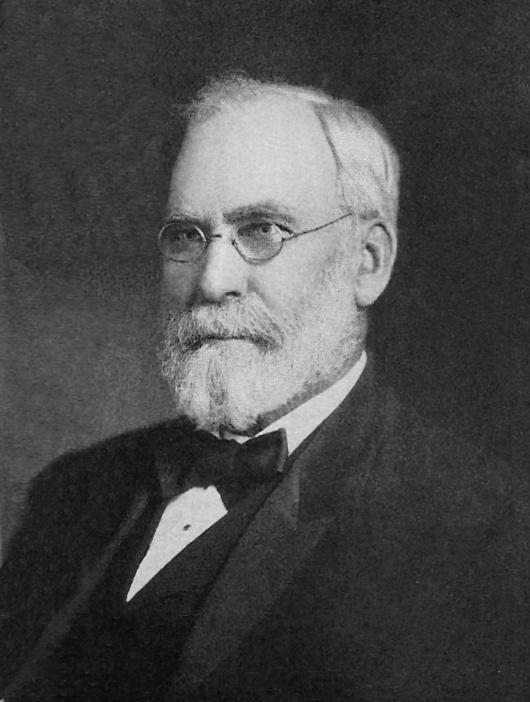
Byron Mac Cutcheon died in Ypsilanti, Michigan, on April 12, 1908, at the age of seventy-one. He was buried in Highland Cemetery, not far from the university and communities that had shaped much of his remarkable life.
His legacy is unusually broad. He was an orphan who educated himself through determination and hard work. He was a teacher who became a soldier. He was a combat leader whose courage earned the Medal of Honor. He was a wounded veteran who returned to school, became a lawyer, and rose to national political prominence. He was a congressman, author, regent, journalist, and advocate for veterans.
For Michigan, Cutcheon embodied the citizen-soldier ideal that emerged from the Civil War generation. His life demonstrated that public service could take many forms—on the battlefield, in the courtroom, in Congress, and in the classroom. Byron Mac Cutcheon is remembered not only for a single act of heroism but for a lifetime devoted to education, service, and leadership.
About James G. Fausone, Esq.
James G. Fausone, Esq. is a partner with Legal Help For Veterans, PLLC, with over twenty years of experience helping veterans apply for service-connected disability benefits and starting their claims, appealing VA decisions, and filing claims for an increased disability rating so veterans can receive a higher level of benefits.
If you were denied service connection or benefits for any service-connected disease, our firm can help. We can also put you and your family in touch with other critical resources to ensure you receive the treatment you deserve.
Give us a call at (800) 693-4800 or visit us online at www.LegalHelpForVeterans.com.
This electronic book is available for free download and printing from www.homeofheroes.com. You may print and distribute in quantity for all non-profit, and educational purposes.
Copyright © 2018 by Legal Help for Veterans, PLLC
ALL RIGHTS RESERVED