
Travis Mills
IED Blast That Changed a Soldier's Life
James G. Fausone
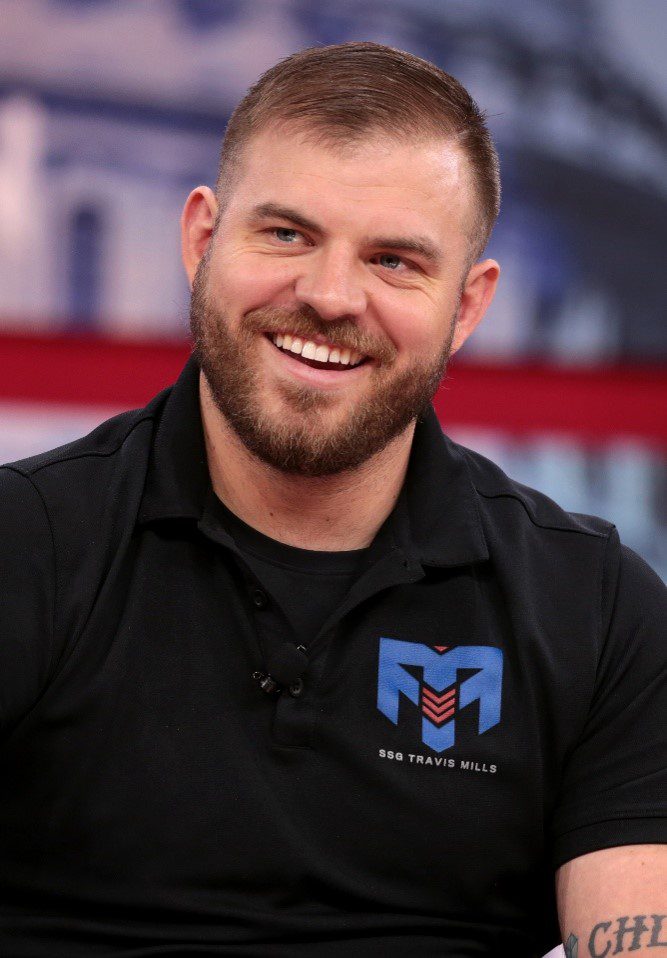
On April 10, 2012, U.S. Army Staff Sgt. Travis Mills was on what should have been another routine patrol in Afghanistan. A member of the 82nd Airborne Division serving on his third combat tour, Mills was an experienced infantryman accustomed to the dangers of Afghanistan. He was less than a week from his twenty-fifth birthday and had a wife, Kelsey, and a young daughter, Chloe, waiting for him at home.
By the end of that day, Mills would be one of the most severely wounded American soldiers ever to survive combat. An improvised explosive device (IED) tore through his body, destroying portions of both arms and both legs. He would ultimately become a quadruple amputee.
The fact that Mills survived was extraordinary. But his survival was not attributable to a single miracle or a single physician. It represented the cumulative effect of a decade of battlefield medical innovation: better body armor, tactical combat casualty care, rapidly applied tourniquets, increasingly sophisticated forward surgical capability, aggressive blood replacement, rapid medical evacuation, and a rehabilitation system that had been built specifically for the generation of severely wounded veterans returning from Iraq and Afghanistan.
Mills’ story is therefore more than the story of one soldier’s courage. It is also a case study in how twenty-first-century military medicine changed the relationship between catastrophic battlefield injury and survival.
Afghanistan in 2012
When Mills was wounded, the war in Afghanistan was in its eleventh year.
The United States had entered Afghanistan following the September 11, 2001, terrorist attacks with the initial objective of destroying Al-Qaeda’s sanctuary and removing the Taliban regime that had sheltered the organization. What followed became a prolonged counterinsurgency and nation-building campaign. By 2009–2011, the conflict had intensified considerably, prompting President Barack Obama’s troop surge and a major expansion of U.S. and coalition operations.
By 2012, however, the strategic direction was beginning to change. The surge had peaked, U.S. forces were transitioning responsibilities to Afghan security forces, and Washington was preparing for a substantial drawdown. Yet the battlefield remained dangerous. Taliban and other insurgent forces relied heavily on asymmetric tactics, particularly IEDs.
For American infantrymen, an IED represented a particularly terrifying threat because it could attack without warning and did not require the enemy to expose himself to direct fire. Buried beneath roads, trails, or other areas where soldiers were likely to travel, explosives could produce devastating blast and fragmentation injuries. Mills encountered precisely that threat.
He was serving with the 82nd Airborne Division and was conducting a dismounted patrol when he encountered the device. According to accounts from Mills and the Army, he triggered the buried IED after setting down his pack at a rest stop. The blast threw him into the air and inflicted catastrophic injuries. His survival depended upon what happened in the next few minutes.
“I knew I was hit”
Mills regained consciousness after the explosion. He knew immediately that he had been badly injured. Looking at his left arm, he saw that it was severely damaged. He also realized that his legs had been devastated.
One of the most remarkable aspects of the incident was Mills’ reaction to the medics. In the confusion immediately following the blast, he reportedly told them to treat his fellow wounded soldiers first. He believed that his own injuries were fatal.
His medics did not accept that conclusion. They went to work. Tourniquets were applied to his arms and legs to control catastrophic hemorrhaging. According to Mills, the bleeding stopped within seconds after the tourniquets were applied. One of the medics who treated him later emphasized that Mills’ survival began at the point of injury. This was one of the defining lessons of the wars in Iraq and Afghanistan.
The revolution in battlefield hemorrhage control
For generations, the treatment of battlefield wounds had been constrained by distance. A soldier could survive the initial explosion or gunshot wound but die minutes later from blood loss before reaching a surgeon. Iraq and Afghanistan changed that equation.
Military researchers and physicians increasingly recognized that uncontrolled extremity hemorrhage was one of the most preventable causes of battlefield death. Tourniquets—which had historically been viewed with considerable caution because of concerns about tissue damage—became a standard component of modern combat casualty care.
By the time Mills deployed in 2012, U.S. soldiers routinely carried tourniquets as part of their individual medical equipment. Training emphasized that controlling catastrophic bleeding could be more important in the first moments after injury than attempting to treat less immediately lethal wounds.
The Tactical Combat Casualty Care system formalized this philosophy. Soldiers and medics were taught to distinguish between care under fire, tactical field care, and evacuation. Under hostile conditions, the first priority was often simply to stop the bleeding and move the casualty to a position where more comprehensive treatment could occur.
Mills was therefore the beneficiary of an entire system developed through hard lessons learned in Afghanistan and Iraq. His medics did not have to improvise the concept of hemorrhage control. They had equipment, training, and a doctrine designed around exactly the kind of injury they were confronting. And even that was only the beginning.
Kandahar: the battle for blood
Mills was evacuated to a hospital in Kandahar. There, military surgeons faced the full extent of his injuries. Portions of both legs and both arms were so badly damaged that amputation was necessary. The immediate challenge, however, was keeping Mills alive long enough for the surgeons to perform those procedures.
He had lost an enormous volume of blood. Mills has recalled that more than 400 units of blood were ultimately used in his treatment. The demand was so great that the hospital’s blood supply was exhausted. Personnel had to provide additional blood through emergency donations. Mills has repeatedly emphasized that the donated blood was a central reason he survived.
The number is difficult to comprehend. A typical blood donation is only a fraction of an adult’s circulating blood volume. Mills’ injuries had produced hemorrhage on a scale where conventional assumptions about transfusion requirements were overwhelmed.
The response illustrates another major development in military medicine during the wars. Medical planners increasingly recognized that trauma patients did not simply need fluids; patients suffering massive hemorrhage needed blood products capable of restoring oxygen-carrying capacity and supporting coagulation. The military medical system consequently developed increasingly sophisticated methods of providing blood and plasma close to the battlefield.
Mills’ case occurred during a period when military medicine was rapidly moving toward what would become an increasingly sophisticated concept of damage-control resuscitation: controlling hemorrhage, replacing blood loss, correcting coagulopathy, preventing hypothermia and rapidly getting the patient to surgical care.
The basic principle was brutally simple: stop the bleeding and replace what the patient has lost. For Mills, that principle became the difference between life and death.
From Afghanistan to Walter Reed
The survival chain did not end in Kandahar. Mills was eventually transported to the United States and arrived at Walter Reed National Military Medical Center roughly a week after the explosion. The Army’s flagship military medical center had become the destination for some of the most complex casualties of the wars in Iraq and Afghanistan.
By 2012, Walter Reed was not merely a hospital in the traditional sense. It was part of an enormous continuum of care extending from battlefield medicine through trauma surgery, intensive care, rehabilitation, prosthetics, occupational therapy, physical therapy, psychological support, and family assistance.
The Department of Defense had anticipated the need for this system years earlier. Beginning in 2003, it developed Advanced Rehabilitation Centers, including the facility at Walter Reed, specifically to address the severe extremity trauma and amputations emerging from Operation Enduring Freedom and Operation Iraqi Freedom.
Mills became one of the most challenging patients that system had ever encountered. He had lost portions of all four limbs. Yet he was alive.
The meaning of a quadruple amputation
A quadruple amputation is fundamentally different from losing one limb. The loss of both legs affects standing, walking, balance and mobility. The loss of both arms simultaneously affects virtually every activity involving self-care, eating, communication and manipulation of objects.
For Mills, the injury therefore represented not merely the loss of four limbs but the destruction of virtually every familiar physical mechanism by which he had interacted with the world. Now he had to learn how to perform basic activities again. And he did so while recovering from enormous physiological trauma.
The rehabilitation effort was extraordinary. Army leaders reported that Mills was spending nearly nine hours a day in physical and occupational therapy. Six weeks after his injury, he took his first steps with prosthetic legs. That achievement was not simply a demonstration of personal determination. It represented the convergence of medicine, engineering and rehabilitation science.
Prosthetic technology had advanced dramatically during the wars. Military amputees gained access to sophisticated devices designed to restore mobility and function rather than merely provide cosmetic replacements.
Walter Reed’s rehabilitation professionals worked with patients to rebuild strength, balance, coordination and independence. Prosthetists worked alongside physicians and therapists. Occupational therapists concentrated on activities of daily living. Physical therapists focused on mobility and endurance. It was—and remains—a team effort.
Mills himself later described the importance of that team, specifically crediting the medics, surgeons, physical and occupational therapists, prosthetists and other support personnel at Walter Reed.
The human dimension
There was another component to Mills’ survival that no medical technology could manufacture: his family. His wife, Kelsey, and daughter Chloe became central to his recovery. Mills was not rehabilitating simply to become medically stable. He was trying to build a new life with his family.
The emotional consequences of catastrophic injury could be as profound as the physical consequences. A soldier who survived a battlefield injury still had to confront the loss of his former identity, changes in family dynamics, chronic pain, prosthetic limitations, phantom sensations, and the psychological consequences of nearly dying.
Mills’ recovery therefore became an intensely personal process. He did not simply learn to walk again. He learned to live again. That distinction is important.
The ultimate objective of military medicine is not merely to prevent death. Modern military medicine increasingly seeks to return the wounded service member to the greatest possible degree of independence and quality of life.
What his story tells us about Afghanistan
It would be easy to treat Mills’ story solely as an inspirational account of personal courage. It is certainly that. But his story also reveals something profound about the nature of the Afghanistan war.
The enemy did not have to defeat an American infantry unit in a conventional battle to inflict devastating casualties. A buried explosive device, invisible to the soldiers moving through the terrain, could accomplish in seconds what conventional forces might have been unable to accomplish in hours. For the American military, the response became increasingly technological and medical.
Better intelligence attempted to identify IEDs before they detonated. Armored vehicles and body armor sought to reduce the consequences when they did. Engineers worked on counter-IED technology. And military medicine developed increasingly sophisticated methods of keeping wounded soldiers alive after the worst happened.
The paradox was unmistakable: the same wars that produced devastating injuries also generated some of the greatest advances in trauma care in modern military history. Mills embodied that paradox. The IED destroyed his limbs. Military medicine preserved his life.
“Never Give Up, Never Quit”
Mills eventually retired from the Army and transformed his experience into a mission of advocacy and service. His recovery became a story about adaptation rather than defeat.
His personal motto—”Never give up. Never quit.”—became associated with his public work and his effort to encourage other wounded veterans. His memoir, Tough as They Come, chronicled the journey from the Afghanistan blast through rehabilitation and the rebuilding of his life.
But perhaps the most important lesson from Mills’ experience is that survival was never the work of one person. There, physicians, nurses, therapists, prosthetists, technicians and support personnel helped transform survival into functionality. And ultimately, it depended upon Mills himself and the family who stood beside him.
Staff Sgt. Travis Mills went to Afghanistan as a paratrooper and infantryman expecting to return home with his wife and young daughter. Instead, on April 10, 2012, an IED nearly killed him and permanently changed his body. He came home without portions of all four limbs. But he came home alive.
Retired U.S. Army Staff Sergeant Travis Mills received the Purple Heart and the Bronze Star Medal (including with Valor) for his combat service in Afghanistan. It is not about the medals, it’s about life. Read Travis Mills’ story in his own words from growing up and to the joy he receives from his daughter.
TRANSCRIPT OF VETERANS RADIO’S INTERVIEW WITH TRAVIS MILLS ON MARCH 11, 2016:
Fausone: Our guest today on Veterans Radio is retired Staff Sergeant Travis Mills. Travis is a veteran of the Afghan conflict, he also grew up in Michigan. He is a survivor of a 2012 IED blast in Afghanistan. Travis, say hello to the Veterans Radio listening audience.
Mills: Well, hello everybody, thanks for listening and tuning in to hear my story. I just appreciate the time I get to be able to tell it, and hopefully people will enjoy it and see where they can take my story and go with it.
Fausone: I think it gives us a great opportunity to talk to this Army veteran, he has a book out called ““Tough As They Come”” and as we go through the interview today, you will see why you should pick up “Tough As They Come” by Travis Mills on Convergent Press and read more of the story, but I really want to start with the early years. Staff Sergeant, you were not always in the Army, tell us a little bit about growing up in Vassar, Michigan.
Mills: Oh, absolutely. Vassar, Michigan is a great place, small town. If you are familiar with Michigan, it is next to Frankfort, if you are not, it is an hour and a half north of Detroit, small little town, and just lived on a 28-acre hobby farm with my parents, older sister, younger brother, and I was a middle child, so obviously I was the favorite, and you know, just kind of played sports growing up, basketball, football, baseball, track, anything and everything, I did it, and just really enjoyed being from that town. I love the people there, and really great support group for me since what happened to me, that’s just it, small town kid that is able to go around and tell my story now.
Fausone: Well one of the things, and we tell these stories, and our listeners want to hear them because sometimes you just read this stuff, or see this stuff on TV, and you think, well those guys are nothing like me. I could never do what they did because they are different than I am, and so let me back up here a little bit, Vassar, Michigan is a small town, a few thousand people maybe?
Mills: Yeah, absolutely.
Fausone: I mean, it is, how many high schools did it have?
Mills: Oh, you say that with an S on it. No, I just had one, and it had two stoplights to get to my house. The one stoplight was just a green arrow. Every time you turned to the right it was a green arrow, no matter what time of day. It was a great place to start out my life. Overall, you couldn’t get away with anything in a town without your parents and everybody knowing. So, I grew up with morals and values. I would go to school and practice Monday through Friday, and then on the weekends, after I hit freshman year, I had to get a job. On the weekends I would work my 18 hours I was allotted by Michigan Laws, and I was a grocery packaging engineer…I was a bagger at a grocery store.
Fausone: But you had a good, you had a better title, right?
Mills: Oh yeah. When the ladies were asking what you do for a living, if you’re a “grocery packaging engineer” they could feel a little better about it. They could tell their parents that they’re getting an engineer. You could find me on the weekends — either I would open or I would close — my best friend would either open or close, so they kept us as spaced out as possible, but we always found a way to make sure we had fun when we were there together.
Fausone: And your mom worked at the grocery store?
Mills: Not at that one, she started at a different one when she was 18. She worked all the way through, and she still works at the same store now. She runs some of the billing department and things like that, a couple of towns over.
Fausone: And what did your dad do while you were growing up?
Mills: My dad worked for a Superfoods, which turned into Nash Finch, which was a big grocery company. He was a diesel mechanic, then went to maintenance, then moved up with seniority and was a truck driver. He would go out in the morning, do truck runs of groceries and come back at night. They never missed a game, as long as I can remember, they never missed a game, they made sure their schedule worked out so they could be there for all the big events, and I’m just really fortunate how I grew up. I always had what I needed.
Fausone: And one of the things is that you played a lot of sports. You were certainly a star on your high school football team, but you also played other sports and excelled at them. Talk a little bit about that, because again, it lets folks know that, hey, he’s not all that different than I am, or my brother was, or my cousin is.
Mills: I played football like I said, linebacker, kicker, punter, fullback. In baseball, I was a catcher, and I was on varsity from halfway through freshman year all the way through. Basketball, I was a small forward, so I played either the guard or the post position because I could dribble pretty good even though I was a big guy.
And then I ran track and I shotput, but I gave that up for baseball halfway through my freshman year. And I was winning the shotput events too, so I was doing really well. And then part of the thing was something that we did in the wintertime, when it was off of football season.
So just as many and as much as I could, I would do.
Fausone: You mentioned you kind of were a big guy. Let’s put some dimensions around it.
Mills: Well, in high school, I graduated at 6’1″, 225. And then I went to college, and I went to college for six months or something. I moved back home, and then I joined the military shortly after. To be honest with you, my girlfriend had a boyfriend that I didn’t know about. And I moved back home to kind of be around her and stuff like that – a little homesick. And then I found out she had a boyfriend, and I thought, well, I should just leave this situation behind. And I went and joined the military.
Fausone: Well, college didn’t work out the way you thought it was going to. You spent a little time at a couple of Michigan-based community college — the Grand Rapids Community College and Delta Community College. And as you say, that kind of wasn’t working out. The social life wasn’t working out. But before we get into how you ended up joining the Army, you have a little military history in the family.
Talk to us a little bit about that.
Mills: Well, absolutely. I mean, my grandpa was in the Navy – fought in the Korean War. My dad was in the Army. He was stationed in Germany. My Uncle Brian was in for 10 years. He was stationed all over the place. My mom’s dad was in the Army, as well. And just a lot of people. My uncle was in the Marines. No one pushed me into it. They actually told me not to do it.
Or not all of them. My dad wouldn’t want me to go because it was wartime.
It just seemed like the Army would pay back my college loans. They would take care of things. So why not try something new and get out there and do something exciting?
Fausone: So, when we talk to a lot of veterans about their stories, they all have a different reason for why they ended up in which service.
Mills: Well, I kept just kicking out student loans and having more debt racked up through college. I didn’t like that I was taking all different classes, and I had to miss 3 hours a day already because of football. And I didn’t like the debt that I was accruing.
I decided I was going to try something else. Army recruits were at the college, and I talked to the Army, the Marines, the Navy, and the Air Force, and the Army had the best thing going. They had a $24,000 bonus, and I could do a lot of jobs.
But then they showed me airborne infantry. I thought, you know what? I’m working at Calvin Klein, folding clothes, making $8 or $9 an hour, not really going anywhere with my schooling. I wasn’t very motivated. I just wanted to try something different. And I thought rather than have this debt pile up and not know what I want to do with it, let me just go to school later when I get older and try something a little more exciting, a little more fun, and see where it goes.
And I happened to join the military about halfway through my second semester of college because I just wasn’t motivated to go. I wasn’t motivated to be there.
Fausone: We’re talking to Travis Mills. He’s a staff sergeant, U.S. Army, retired. He’s a survivor of an IED blast in Afghanistan in 2012, and he recently wrote “Tough As They Come”, which is a great book. I encourage everybody to go out and get it. It’s a really good read.
We’re at that point where you’re in the Army, you’ve gone through basic. Talk to us about how you find yourself heading towards the 82nd Airborne.
Mills: Well, they showed me a video in the crew’s office of airborne infantry, so I knew I wanted to go airborne. And then I went through basic training, got that knocked out, went to airborne school. And in airborne school, they said that you can pick any airborne unit that you want.
You can go to Polk, Alaska, 173rd in Italy, or you can go to 82nd. And 82nd or 173rd are my real options. The other two didn’t really sound like anything I wanted to do.
All my buddies that were there decided they were going to go to 82nd, and I thought, you know what, I’ll go with them. So, 22 of us went to 82nd. Nineteen of them went to 1st Brigade, one of them went to 2nd Brigade, and two of them went to 3rd. I went to 4th by myself.
So, I didn’t end up getting stationed with one other guy that I decided to go to 82nd with. But it’s just great history, home of the airborne, and I just felt like a real good fit. I really liked what they stood for.
Fausone: Well, as you wrote in the book, you said you were 10 feet tall and bulletproof when you got your blood wings. Tell us a little bit about that excitement and what you were feeling at that point.
Mills: Well, I mean, just to know that I’m part of something special, something like you grow up and you watch Band of Brothers, which is, I think, one of the best miniseries ever created. And it tells the story of the 101st guys. But just to know that I was airborne, I was doing something that not 1% of people in the United States do.
And people that I trained with were part of the best. They’re part of the elite, they’re airborne, and that made me feel good about it. And they really built you up to know that you got to have confidence, you got to know what you’re doing is worthwhile.
And it’s just really exciting to be able to accomplish that goal because not everybody that starts airborne school makes it through. You know, I saw one guy lay down on the tailgate of the plane and cry and say he didn’t want to jump and he was going to not make it. Everybody just kind of walked past him and held him, and then we jumped.
A lot of people halfway through school didn’t want to do it no more or opted out. It was just a really great experience to be able to do that.
Fausone: You had mentioned in passing, and I wanted to back up to it, that not everybody in the family was thrilled with you entering the military and the Army in particular because of the sort of the war that was going on. What year are we talking about that you joined up and became part of the airborne?
Mills: March 2006 I joined. In August, I graduated airborne school and was shipped to Fort Bragg.
Fausone: And your dad was quite concerned about all this, wasn’t he?
Mills: Well, yeah. I understand it. You know, I’m a parent now, so I never wanted anything to happen to my kid.
I didn’t want my kid to be in harm’s way. My daughter is the kind of my world. I don’t know.
Actually, she is my world. So I understand where my mom and dad were coming from. But I’ve been known to not exactly listen to what mom and dad say, and then look back and say, oh, yeah, it wasn’t the smartest idea. You know, not so much in the Army.
I really enjoyed the Army. I just had one bad day at work, and I can’t justify one bad day at work as the whole six and a half years I was in being a horrible time because I did love it. But my mom and dad weren’t very thrilled about it, but they understood.
Once I signed up and they saw the excitement, they knew there was something I wanted to do. My mom was worried I’d go to the military because she knew I really enjoyed it because it was part of that camaraderie and that brotherhood that you get playing sports. And she was just a little nervous about me doing it, but it was something I wanted to do.
And once you grow up, you have to make your own decisions in life, and that was the one I made.
Fausone: Well, I think the story you’re telling here about mom and dad’s concern is universal. I think it’s something that every parent has that concern, as you say. But they have to let you make your own decision, and ultimately they came back around and they were pretty big smiles on their face on some of the pictures that you’ve got in the book with you in uniform and your arms around them.
Did they both kind of come back around and embrace your decision and fully support you once it got going?
Mills: Oh, absolutely. They were always happy and proud of me. And then I made the basics, and I made the airbornes, and I got to come down and see.
And just having a purpose and being motivated and knowing what I wanted to do with my life. And at least for the next four years, I knew I had to do the Army, so I might as well be excited about it. And I was able to show them around and call my dad, Hey, Dad, I went and shot this machine gun today. Or, Hey, Mom, I jumped out of an airplane. Don’t worry, I’m safe.
And just a really good time I had in joining. And they understood it. I’m more of an adrenaline junkie than a lot of people I’d imagine.
Fausone: Let’s talk a little bit about your first couple of deployments to Afghanistan. As you sort of alluded to it in that third deployment, you had one bad day.
We’ll get there. But I want to give folks a sense of the experiences that you had in your first couple of deployments in Afghanistan.
Mills: Oh, absolutely. My first deployment, I left in January of 2007. And I was a personal security attachment for a colonel. I had an awesome job. I just got to hang out, take the colonel around. And it’s a private getting experience that you normally don’t get when you’re in the infantry.
I was treated like just one of the guys. It was a small maybe a 12-man team. And everybody got along with everybody else.
There was no match your normal, like, private, go do this, private. I had a name. You know, Mills do this, Mills do that.
And we’d get things done and work really closely. And it was just really an awesome job to have. And at 19, I was in charge of like $1.5 million worth of equipment. I signed for Humvee and all the stuff inside of it. I was the one that, after a while being deployed, I was moved up to new positions where I became a truck commander. And I was able to be the one that, if we got in a firefight, I was the one to say either shoot or don’t shoot. It was on my shoulders. As a 19- or 20-year-old in the Army, which was exciting and exhilarating in the rush. But, yeah, and then kind of moving on from that, it was seven months in. I’m not sure if he wanted to get into it yet or he wanted to take a break or anything.
But that’s how I, my medic and me were always hanging out every day with other guys. And he went home in September of 07.
Fausone: Well, wait a minute. Why don’t you give his name?
Mills: Oh, well, Josh Buck, my brother-in-law. I gave that away, didn’t I? Josh Buck.
Fausone: You did. You jumped right to the punchline.
Mills: I didn’t mean to. Josh Buck, he went home in September of 07 to have his first child. And his wife was going to have a baby and was all excited. He went home and his little sister, who was 18 in college, decided to look at all of his pictures. He was showing them all off. She said, who’s that guy?
And there was a 6’3″, 275-pound guy lifting weights all the time that she thought was just pretty good-looking with some nice-looking eyes and big old arms. And she said, who’s that? and sent a MySpace friend request. And that happened to go to me. And I was 20 at the time. I hit accept.
We started chit-chatting. And by the beginning of October we were full-on messaging and webcam chatting and whatever, whenever I could. And then by mid-November, I said I’m coming home in December.
I got an 18-day leave because I had a 15-month deployment. And I said, I’m coming home in December. I’ve been here about 11 and a half months. I think I need a vacation. Do you want to go on vacation with me? And to my surprise, she said, yeah, let’s go.
Fausone: Now, I’m going to back you up and slow you down a little bit because, again, I think a lot of guys maybe have experienced this. Josh Buck was from Texas originally. So, you didn’t know him until you got in the service, right?
Mills: Oh, yeah. I didn’t know Josh until I got in the service
Fausone: You guys go over to Afghanistan and end up bonding and become pretty, maybe best friends, pretty good friends.
Mills: Oh, yeah. There was a group of us. There was four of us that hung out every day, ate dinner together every day, went to the gym every day.
Fausone: So much surprise to Josh, I suspect, his little sister looks at these pictures, sees this guy with this great smile and these huge arms and starts corresponding with you. How did Josh take that when he found out?
Mills: Well, he wasn’t happy, I’ll tell you. He came back. He was pretty mad. Everybody was kind of making fun of him about me and his sister. You know, he knew I had good intentions. I wasn’t a bad guy. He knew that. So I don’t know. He got over it kind of quick because there’s nothing you can do about it.
Fausone: Let’s go to the rest of that story, and then I’m going to back you up to your second deployment and some of the things in Afghanistan. But you and Kelsey continue to correspond and meet each other’s family. And where does this lead?
Mills: I mean, we talked. We went to Mexico for a week first time I met her. I picked her up in Dallas, Texas and went to Mexico for a week and then back to Michigan for a week and then I went back overseas. We decided we were going to get married. Came back home. We got married in June of 2008.
I don’t know if you count time together in person, about two or three months together in person before we got married in June of 2008 and then moved to Fort Bragg together. I was already there, but she moved there with me after the wedding we had in Texas and started our life together.
Bought a dog two weeks in. Still got him. Best friend. He’s a yellow lab. His name’s Buddy.
Fausone: Well, it is a great love story. It’s talked about in the book, “Tough As They Come”, by Staff Sergeant Travis Mills. We’re talking about his time in the U.S. Army, his time in Afghanistan. One of the things you talk about in Afghanistan is some things that I think certainly those who aren’t in the military may not understand, and that is you guys had to, like, live in really tough conditions. Talk to us a little bit about the conditions you found yourself in in these deployments.
Mills: Oh, absolutely. Well, the first one was very nice. We’d go out and come back to the big FOB.
But the second one, our first 50 days in the country, we actually built a couple of mountain top FOBs. They were building a new FOB up in the north, so there was a big choke point, which was in between two mountain tops. And they passed our platoon with going out there and covering the mountainside.
So we went up, and for 50 days, we lived on top of the mountains, and we did patrols up and down the mountains and all around the area so that when the convoys came through, the 100 to 200 truck convoys with all the military equipment, with all the gear on it, with all the, they call it supplies, and S4, like, which is wood and materials to build. We made sure that the battle band was kept at bay, and they didn’t try to come ambush and shoot down at our guys down at the bottom of the mountain. So, yeah, for the first 50 days, that was our life.
We lived on top. You know, we didn’t have showers. We didn’t have bathrooms.
We just drove our trucks up on top of these huge mountains. We found some sketchy routes, but, hey, we found them. And we went and lived up there out of our sleeping bags and just kind of did patrols and got resupplied water and MREs every day.
Fausone: Well, I think if you, if our listeners go read the book, “Tough As They Come”, by Travis Mills, you’ll get a real ground-level view of the conditions that our men and women had to operate in in Afghanistan because you had multiple deployments, and, as you say, one was a much different living condition being on the forward operating base as compared to digging a hole out of the top of the mountain and a hole in a region. But we’re going to come back right after this and talk some more about the third deployment and, if you will, the one bad day at work.
Travis, after you got married to Kelsey Buck in June of 2008, you got notice of a third deployment. I’ll call it an opportunity. Tell us a little bit about the decision to go on the third deployment and sort of those issues.
Mills: Oh, absolutely. Well, just to backtrack a little bit, I went on my second deployment, came back, and my wife and I had bought a house, so she had to drive me home for the first time. And then I got back in August, so four months later, we were fortunate to find out that we were going to be parents.
She got pregnant, and the baby was due in September. And then around the time of September, we had the baby coming. I had orders that were supposed to take me to Fort Hood in September.
And I really didn’t want to move. We just bought a house. We also knew that deployments help out financially, but also these new unit guys that came out of high school, and we’re talking 17, 18-year-old kids that come out of high school, they look up to me.
Now I’m a staff sergeant. Now I’m a squad leader, and I’m in charge of what they do. With their training and overseas, they’re looking at me for answers to stay alive, to stay within what’s safe and not safe.
I’m the one that tells them, move here, go there, do this. And everything’s on my shoulders, but they have that trust in me. And I just didn’t feel right with orders sending me away that I would be I thought I’d be leaving them behind.
I went to the Sergeant Major’s office, and I said, Sergeant Major, did I do something wrong? Why are you kicking me out of here? And he said, what are you talking about?
And I had good rapport with him, so it was more of a joke when I said that. And I showed him my orders, and he said, Well, let’s see. You’re a 82nd Airborne.
I said, Exactly, Sergeant Major. I just graduated Jumpmaster School.
My wife and I understand the consequences of what could happen overseas, but we both accept that, and I just can’t leave my guys. And he said, All right, I’ll get them canceled. Don’t worry about it.
So he canceled them for me. Good, bad, or indifferent, I don’t dwell on that fact. I mean, I wanted to go with my guys.
I wanted to be there for them, and I wanted to make sure that my wife could stay at home where we bought and lived and raised in North Carolina. So, February had come around, and my daughter was four months old. I had said my goodbyes at like 10 o’clock at night, and I shipped over to Afghanistan for my third time.
This one was a little bit different. We got dropped off in an area that was pretty hostile and just kind of started patrols. The first day we got into a huge firefight.
I actually ended up saving a guy in a firefight. He tore both his ACL and MCL, whatever other three-letter acronyms you can for your knee. He tore all that out and was dropped down in a wadi.
I had to pick him up and run him out, but that’s something you do for people that are for your soldiers and brothers in arms. So just a whole different environment. You know, day one, it was right to the gunfights and went on patrols and things like that.
Fausone: And again, this was a much different deployment, as you say. Sort of day one was big firefights and loss of life. Well, you say you just ran to the wadi, picked the guy up, and ran back.
Mills: Not loss of life, just he injured himself breaking contact. I was the first one injured in my platoon.
Fausone: I think you got a bronze star for running in and grabbing him and pulling him out.
Mills: Yeah.
Fausone: So, again, there’s more detail in the book. I’ll encourage our listeners to go get a copy of “Tough As They Come” and read some more about sort of that intense activity that occurred there. But part of what you sort of had a routine on this deployment, I don’t know if it just started on this deployment, but that was to sort of when they were coming back in, you’d get to the front of the patrol before it got back to the gate.
Tell us a little bit about that routine.
Mills: Well, absolutely. As a matter of fact, the very first day we were on that firefight, I could tell a lot of the new guys had never been in anything. They were pretty shaken up.
It was pretty heavy. One of the more heavier ones that I’d actually been in, too, which was pretty surprising because we’ve been in some pretty fun stuff. And I just wanted them to know we did a great job.
Nobody got hurt. You know, Chester got it. You know, tore his ACL in. I wasn’t like the enemy did that to him. He just, like, body broke down and it happens. But so I ran to the front, and I started singing some of the A-Fighting songs and some running cadence and high-fived the men and put a smile on their face.
And when we got back guys one guy, he was just chain-smoking. You know, I felt bad. I said, hey, man, you did a good job out there.
Don’t worry. And then I had two guys come up to me that were kind of questioning why I was put in a squad leader position as a weapons squad leader because I was the youngest E-6 for three years, as well as the weapons squad leader is usually the most senior E-6. And it goes, like, first sergeant, second sergeant, weapons squad leader.
And, like, that’s the second order. And then first, second, third. So, like, they’re all E-6s, and usually the top E-6 is the guy that has the most time in and the most rank.
But that was me, and I was the youngest by three years. And at least my time in grade. But we got back, and two guys that had been on our deployments with other units came back and said, look, Sergeant Mills, we didn’t get why you were put in your position.
You know, we had other deployments. We had other NCOs that we respected that acted a lot different because I was always smiling, happy, joking, never really yelling or anything like that to make people do what I wanted. I led by example.
I didn’t think that my rank made it so I didn’t have to, like, fill sandbags or help out doing work. I was always right there doing all the work with them, making sure the job got done the way I wanted it, but that I showed them that I was willing to work with them. I wasn’t thinking about how to grab my rank.
And they said, after today, like, we’ll provide you the hell of a back. Like, seriously, we get it now. And my first sergeant knew that about me.
So that’s why he put me in that position.
Fausone: Absolutely. I think that’s one of the things the military can do pretty well is recognize talent and advance it. And I want to draw the line back to from reading about that situation and draw that line back to the same sort of attitude.
You know, you’re a guy with a positive attitude who keeps people light and happy. And you might be working hard, but you’ve got a smile on your face while you’re doing it. And I think that’s what I saw from you when you told us about growing up in Vassar, Michigan, and playing all that high school sports.
Some of it was a lot of tough work. But I kind of think you’re probably always the guy at the front of the pack smiling about it.
Mills: Oh, absolutely.
There’s no reason. I had one – my second point I had one day that was supposed to be five hours and ended up being like 36 hours. Everything that could go wrong did go wrong and more.
And that’s when I made the decision you can’t – I mean, I was always happy, but you can’t really affect the situation. You can affect your attitude towards the situation. And that day changed my life.
It was a Valentine’s Day, actually. And I just – you can’t – I couldn’t change what was happening. I can’t change that we’re getting shot at.
I can’t change that the trucks are breaking down. I can’t change that. But I can change my attitude towards what’s going on.
I can change my attitude towards how to handle a situation.
Fausone: So, listeners, we bring you these stories because they’re worth telling, but also to give you sort of pearls of wisdom. And I hope you just recognize the one that Staff Sergeant Travis Mills gave you. You may not be able to change the situation, but you can change your attitude about the situation.
I think you live by that, don’t you, Travis?
Mills: Oh, absolutely. Absolutely. I just with my recovery, with everything I’ve done, I just every day had to be my attitude that got me through it.
I don’t want to jump ahead of anything.
Fausone: No, we’re there. Let’s get there. It’s five days before your 25th birthday.
I want everybody to kind of understand how young you were as well in this process. But it’s five days before your 25th birthday. Patrol’s ended.
You’re kind of scooting on up to the front end. Tell us about, as you describe it, the worst day of work in your life.
Mills: Oh, yeah. So, on April 10th, 2012, I was walking on my on my regular patrol, about 430 in the afternoon. And we went out.
We got calls with IEDs. I mean, there’s IEDs everywhere.
So, we were on patrol walking and came to a short halt. My unit, not my unit, I guess my squad and third squad went to the right and set up support by fire. And as we were setting that up, someone would get flanked, my LT, and first tech squad went into the village.
And we went to a berm that we had not really used before, but we just kind of used different berms and different things. And I got the guy with the minesweeper, Private Sessie, walked up and said, hey, man, sweep the area. He did.
He went down a path up and down the berm, not once but twice. Nothing set the alarm off on the minesweeper. Nothing was out of the ordinary.
And I thought, okay, cool, this is a good spot. So, I said, okay, cool, you’re good. And I told one of my team leaders, Ryan, I said, come on up here real quick.
Where do you want to put the gun at? He told me his position. He was digging.
I okayed it. I said, that looks good. All right, bring that up.
And I said, do that. He turned around to go tell him not to come up. I took my bag off because we linked the rounds up.
So, in case we dig in something, we had 2,000 rounds linked up to fire back to the enemy on the heavy gun. And it just so happened that my, it was between 80 and 110 pounds, and I ended up getting in bed. My bag hit the ground.
And when my bag hit the ground, it set off one of 13 in a row IEDs. And a bomb detonated. I immediately went off.
The percussion knocked me right to my face. I went from my right to my left on my face. And I rolled over.
And my left eye started to swell shut. And I had dirt and mud in my eye. I rolled over to my right arm, and it was gone at the mid-bicep.
My right leg was gone at the knee. My left leg was hanging on by tendons and muscle and skin, but it snapped through the bone, dangling to the left. And my left hand was still there, but my wrist was blown out, and my pinky and ring finger were gone, snapped right off.
And I didn’t know what to do. So, I reached up to my mic, and I hit the mic. And I said, LT, I just stepped on a bomb.
I’m going to need you to send your medics over here with my medics. And my medic came running up, and I said, don’t worry about it, Doc. Save my guy and let me go.
And we had a little bit of an argument because he was working on me. Him, I’m a platoon sergeant. I said, hey, don’t worry about it.
Like, save my guy. Don’t worry about this. It’s okay.
And he told me let me do my job. And then my other two guys, they were hurt, Fessy and Riot. But they were okay.
They dealt back. They had shot me on the face, and I had to be evacuated. But they were walking.
I’m good. And, yeah, my medic just worked on me. And the other medic came running up and started working on me.
And he kept trying to calm me down because we were a tough dude. You know, I tried to talk to the patient and calm him down. He kept saying, Sergeant Miller’s going to be okay.
You’re going to be fine. Sergeant going to be okay. And I had to look at him because he was kind of in a little bit of shock.
And I said, Doc, shut up. It’s okay. Just do your job.
And I calmed him down. And he tells people it was a creepy way how calm I was. I mean, honestly, at that moment, I couldn’t control my situation.
I couldn’t control anything that was going to happen to me. But I could control how everybody saw me and my attitude towards it. I didn’t want to die.
I was not suicidal by no means. I promise you that. But if I was going to go, I wasn’t going to go like you saw in the movie Saving Private Ryan when the medic went and started crying for his mom and things like that.
I just figured it’s out of my hands what happens to me right here. So the best thing I can do is keep my heart rate low, not try to get my blood to be pumping out of my body with adrenaline, and let the medics do what they can. And they did.
Fausone: So, listeners, this is one of the most catastrophic IED injuries that’s ever been survived. Travis Mills is one of five guys who has survived quadruple amputee injuries. I don’t want to dwell on this.
You don’t dwell on this, Travis. But I do want to talk a little bit about sort of, because I think it’s important for our listeners to understand, sort of the health care that you received and the length of time it took sort of from that point in Afghanistan to get back to the states where the family is. So can you tell us just a little bit about that?
Mills: Oh, absolutely. So when it went off and my medics were working on me to get me fixed up, about 10, 15 minutes, the helicopter was there. I got in the helicopter, and this time I’m still I still have my left arm.
And I fly, and there’s a really great letter from the medics on the helicopter. I let people buy the book to read so that got to be some sense for them. And there’s actually a lot of text that people probably enjoy, but it’s as tough as it comes.
But I get to the journey ride to the operating table. On the operating table, they tell me, like to relax. I keep trying to sit up.
I’m telling them, like, I got to get back to my guys. Leave me alone. I’m fine.
You guys don’t let me get up. And they’re like, I don’t know how you’re still awake, Sergeant Mills. You need to go to sleep.
And they started pumping fluids into me. And that’s when I realized, like, I might not see my wife or my daughter. My little girl might never get to see her.
And they knocked me out. Two days later, and, oh, I just got to tell you this real quick. When they took my pants off, after they knocked me out, my left leg came off with it.
So I was a triple. And then they, Kandahar has a crazy survival rate. Kandahar Van Zandt Hospital, 99% of people that make it there alive believe they’re alive because they’re just so good at traumatic injury.
And that’s a true testament to how professional they are. And, unfortunately, we just had to go through and see to get that good. But from there I went to Baghdad, Afghanistan on April 12th to cut my left hand off.
My brother-in-law actually was deployed with me but not in my area. He was running the aid station.
Fausone: This is, for our listeners, this is Josh Buck, who we talked about before. So Josh was also in Afghanistan. And he was able to travel with you from theater to, ultimately, to Germany and, I believe, all the way back to Walter Ruther.
Mills: Oh, yeah, yeah.
Fausone: Walter Reed.
Mills: So we go to Baghdad, Afghanistan. They take me into surgery. My left hand is necrotizing.
So the skin’s dying. They had cut it off at the mid-wrist. So now I’m a quadriplegic.
Two days later, I’m in Germany, Landstuhl, Germany, the exact hospital. And they wake me up for the first time. They had to medically sedate me.
And 14 hours of surgery, the initial hand-to-heart, nine doctors, seven nurses, two nurses for nine hours pumping air into my lungs to keep me alive. And I wake up. My brother-in-law’s in the room.
And I say, my shoulders, how are my shoulders? First thing I ask him. He tells me about Ryan and Fessy.
Ryan’s with us in Germany. Fessy’s back in Baden-Württemberg, so doing testing for traumatic brain injuries and things like that. And then I ask him, am I paralyzed?
And Josh says, no. And I say, Josh, no, seriously. You know that lied to me.
I can take it. He said, I can’t feel my fingers and toes anymore. And he told me on my 25th birthday.
I remember April 14th was my birthday. He told me that I had no arms and legs anymore, that they were blown off. So I didn’t talk to anybody for a good bit.
I was pretty angry. I didn’t want to call my parents. I didn’t want to call my wife.
I didn’t want to do anything. And I ended up calling them, finally say I’m alive, whatever. And then I made it back to the States on April 17th.
And my first time seeing my wife, it wasn’t that Kodak moment. It was me saying, sign the paper, yelling because she had to sign a paper because she was in charge of my medical care when they had to cut off my right leg two inches higher because the stitches had ripped open. The sutures ripped open, so they had to cut my leg two inches more, and she had to sign off on it.
Fausone: So, folks, I want to – again, I don’t want to dwell on this, but listeners, as you can only imagine, the both physical and emotional pain as a result of working hard to survive this IED blast and everything that went with it. There’s a whole decision process that has to go on that’s related in the book. We’re talking to Travis Mills, author of “Tough As They Come”, about putting him into an induced coma with some crazy drugs to try to shut the pain centers down and bring him back out of it.
So we’ll leave that for you to read in the book. It’s a fascinating medical story. I think there were 13 surgeries involved.
Travis is giving you some idea of the length of time these surgeries took. But you actually got yourself to a point where you were sort of the cheerleader of Walter Reed Hospital. Tell us a little bit about that.
Mills: Absolutely. I was fortunate to have the second-ever quadriplegic team come in, side nicely, and tell me, okay, man, you’re going to be fine. You’re going to walk, you’re going to drive, and you just got to be patient.
I’m actually not good at patience. So I started working out. I got in an argument with the doctor, saying I was going to work out, I was going to get better.
He said, you’re not ready, your stomach isn’t whatever, test signs say you can’t. I said, no, no, you don’t understand. I’m going to.
We argued for a good 30 minutes, and I called him every half hour for four hours straight. He let me go to physical therapy and occupational therapy for the first time. I ended up laying on my stomach, and he had my back stretched the pelvis out and falling asleep.
But it was a start. And then I just took it on every day as a real job. When I told my wife on the 18th of April, I told my wife go ahead, take the house, take the cars, it’s all yours.
I’ll financially support you. Whatever I have is yours, but you don’t have to put up with this. And she said, that’s not how this works, so she’s going to be there for me.
And my little girl, who I thought would see me as a monster, thinks I’m just still her dad. I’m still the same as I used to be, squeeze my nose, giggling, laughing. And they’re going to be there for me, so I’m going to get better.
So I turned it into a full-time job. At first, I could only do one hour of each a day, physical and occupational therapies. And that turned into two, and then three, and then four.
And then four, you know what, it was 40 hours a week. You know, five days a week, or 40 hours a week is five days a week, eight hours a day. And at five weeks in, I was able to put my arm on and use it for the first time, speed myself, and do things like that.
At seven weeks and four days in, just under two months, I took my first steps of all three, which was really fast. I took my first steps around the track, and I walked three laps. She said I might walk one, I did three.
And I never looked back. I just thought, if my wife’s going to be here for me, if my daughter’s going to be here for me, if they have this technology out there, if they have the things that make me able to live life, then I’m going to. And I did 19 months at Walter Reed.
Great facility, great people. And I left there in November of 13. And, I mean, I moved to Maine.
Well, I moved all over. I got my house built by the Heresy Foundation up here in Maine. And I live here now, and I live a pretty good life.
I took my daughter to school, and I went to the CrossFit gym. I mean, that’s I drive a truck with my feet because I’m able to with modern-day technology. I don’t want to go too far ahead of where you want to take this.
Fausone: No, this is great. Before we get more about life today, and I want to make sure we finish up talking about the foundation, let me back up, though, just for a moment. And, again, one of those pearls of wisdom that you’re giving our listeners is sort of the power of the family unit.
I mean, your wife said, Hey, Big Mills, quit trying to push me away. I’m here. I’m staying in.
Your daughter, obviously, has had a big impact on you to say, I’m going to be there for her. So do you want to talk a little bit about the power of the family?
Mills: Absolutely. I did want my wife to leave me because I thought that she wouldn’t want to burden her. I didn’t think that.
I thought it would be a nuisance in her life. And once she said she was going to be there and she was going to stick it out, it was just ridiculous. I didn’t even say something.
You know, so horrible to her. And I just love her so much I didn’t want to hold her back from what she wanted to do in life. And she was like, Nope, we’re going to get through this together.
And she was the tough one. You know, usually I was the rock or the rugged guy, or whatever, and she was the one I was holding it together. And my little girl not a lot of parents can say they literally learned to walk with their kid, but I literally learned to walk with my daughter.
I mean, there’s video of me on my short legs, like, walking around in the military advanced training center in the gym with my little girl holding my hand. She can’t walk that good yet. And we would ride around the hospital in my wheelchair and go to the subway and pick up food and seek a cookie here and there when mom’s not around and meet people in their rooms.
And I mean, Chloe’s more recognizable than I was probably. Well, maybe not meet that to hold an arm’s length thing, but Chloe did my parents around the hospital. My parents would come to visit and they’d be like, Oh, Chloe, how are you?
I don’t know who these people are. They just, they seem to know Chloe because we would go all over together, just me and Chloe and have a great time. And like yesterday it snowed yesterday night, but before that it was really nice weather up here in Maine where I’m, where I’m currently living.
And we went to the playground and I was pushing on the playground outflow the swing set and playhouse, whatever we have in our backyard. I was out there with her pushing on the swing set. We live a pretty, pretty normal life.
And I don’t think I would be the same without them. I don’t truly think my recovery would have went as smoothly as it did. I don’t think I would have had the same amount of drive and dedication as I do.
And I don’t think that’s a bad thing to tell people. I think that’s just 100% full honesty. My little girl got me through this whole thing in my life.
Fausone: Well, and I’ll tell you, Travis, we’ve talked to a lot of guys in different situations and there’s always somebody in the family or friend who helps. Maybe it’s a buddy who helps pull you out of the darkness, gets you off the couch and makes you realize there’s a lot of good life left. And you are certainly a good example of, yeah, you might have to power through this for a long period of time, but at the other end, life’s pretty good.
Tell us what you’re doing with your foundation these days.
Mills: Absolutely. So the books help and drive the message of the foundation. The foundation is my big term, big, long-time goal.
Like everybody says, what’s next for you? It’s a foundation. We’ve raised over $900,000 as to date.
The Travis Mills Foundation, what we are doing is we’re resurrecting or restoring a building that’s in Maine. So this is Arden Estate in Mount Vernon, Rome area of Maine. And we host a veterans camp.
We’ve done two proof of concepts the last two years and we had such great positive feedback. We thought we should do this all summer long. So right now we’re in the process of raising money and the reconstruction and of this property.
And we bring out people in my situation, which I don’t consider myself wounded anymore. I just say recalibrate a warrior at that. I used to be wounded and I have scars, but we bring people out that are in my same situation with their families and show them how to live life not on the sidelines, how to get out there and be active, how to do kayaking, canoeing, boating, swimming, fishing, tubing, and to have an outlet to build a network where if they have a situation they’re facing and they don’t know what to do, they can call me.
I mean, I’m a peer mentor, I have a guidance counselor on Boston bombing went off. I was sent up to Boston to meet some of the victims. And I met about 16 of them at Spalding rehab really, really quiet visit was nothing publicized.
Didn’t need to be, but I want them to know that they’re not alone in what they’re going through and they can always reach out. They can always ask my wife and I for help and they can always have someone to talk to if they’re going through a rough situation. And it’s just been a real powerful thing.
And we’re really excited about the progress we’re making. Now people are seeing the vision, they’re understanding it. And it’s going to be a hundred percent ADA compliant building.
And we’re going to hopefully be able to host 12 weeks out of the year for families to come in. And it’ll be between 35 and 40 people at a time that we can host. And it’s just going to be an amazing experience for them to be able to walk away with not just the ability to do these activities, but to have their families know that they can still be an active member with their families.
They can still be an active member in society. And they need to be comfortable in their own skin. They don’t have to feel bad or embarrassed about what happened to them.
Just every day work towards getting better on your legs, work towards getting better at helping out or being there or doing some goal because life’s not over just because of this.
Fausone: So I think, again, in that last discussion by Staff Sergeant Travis Mills, who we’re speaking to, listeners, you heard a number of pearls of wisdom. Hey, reach out and ask for help. There are people who are willing to give it.
Be a productive member of society. You still can be and be comfortable in your own skin. That’s all great words of wisdom, Travis.
I really appreciate it. But tell us, as we come to the end of our time, if there’s somebody who would like to know more about the foundation, where can they go to get some more information and maybe help out?
Mills: Absolutely. Everybody can reach out and get ahold of me. Use my website, TravisMills.org.
You go right to that. It has everything on there, the foundation tab, where you can click and find out what we’re doing. We keep updating pictures, let everybody know what is going on out there.
I don’t take a dime for the foundation. I never will pay myself. I will not pay my board members.
All the money raised goes to the project, and that’s very transparent in our statements and all our paperwork. We are a 501C3. As well as there’s other things that I do.
I speak nationally. I go around the countryside. I was in Washington State speaking at Microsoft, and then I was in California the next day speaking at the Reagan and the Nixon libraries.
So if I’m anywhere near your area and you find out I’m coming, please come out to the show and meet me. As well as just check out what I’m up to and send us an email. The email is info at TravisMills.org, which you can find on the website.
Fausone: Well, I want to thank you, Travis, for taking some time talking to the veteran radio listeners today. We’ve been talking about your new book, “Tough As They Come”. It’s really a great story about a recalibrated warrior.
It’s a wonderful read if you have any interest in the Iraq and Afghanistan wars and you kind of want to get that down-on-the-ground feel, this will certainly give it to you. And if you want to get inspired to get through a hard time and realize that you can get through it, I think this is a book I’d recommend to everybody to do that. So I want to thank everyone for listening to Veterans Radio today.
About James G. Fausone, Esq.
James G. Fausone, Esq. is a partner with Legal Help For Veterans, PLLC, with over twenty years of experience helping veterans apply for service-connected disability benefits and starting their claims, appealing VA decisions, and filing claims for an increased disability rating so veterans can receive a higher level of benefits.
If you were denied service connection or benefits for any service-connected disease, our firm can help. We can also put you and your family in touch with other critical resources to ensure you receive the treatment you deserve.
Give us a call at (800) 693-4800 or visit us online at www.LegalHelpForVeterans.com.
This electronic book is available for free download and printing from www.homeofheroes.com. You may print and distribute in quantity for all non-profit, and educational purposes.
Copyright © 2018 by Legal Help for Veterans, PLLC
ALL RIGHTS RESERVED
OUR SPONSORS