
The Long and The Short of it
Medal of Honor Recipients
James G. Fausone
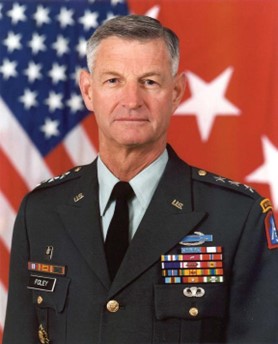
Movies and streaming shows give an image of military men as a certain size and physical specimen. Nothing could be further from the truth. Those in the military come in every shape and size. The US Army has height requirements, and for men, they must be between 5’ and 6’8”. It makes sense from a logistics standpoint as equipment, clothing, gear, and vehicles must fit all types. However, it is not the size of the servicemember, but the size of their heart that matters.
These two stories make this point clear. One man was 6’ 7” tall and almost too tall to serve. The other man was 5’2” and almost too small to serve. Both not only served in Vietnam but received the Medal of Honor for their actions on November 5, 1966, in the same battle near Quan Dau Tieng, Vietnam. Foley was the company Commander, and Baker was a Sergeant. Fate put the men in the same company, but Army humor put them together in the White House for the Medal of Honor ceremony, creating a lasting visual image of the long and short of it.
Robert F. Foley: A Leader Who Never Stepped Back
On a humid November day in 1966, deep in the jungle near Quan Dau Tieng, a young Army captain stood fully exposed to enemy fire, refusing to yield ground. Around him, bullets tore through trees and earth, men were wounded, and chaos threatened to overwhelm the battlefield. Captain Robert F. Foley did not retreat. Instead, he moved forward—again and again—calling his soldiers to follow. That day would earn him the Medal of Honor, but it would never define him as much as the decades of leadership that followed.
Robert Franklin Foley was born on May 30, 1941, in Newton, Massachusetts, and raised in the neighboring town of Belmont. His childhood unfolded in the shadow of World War II, in an America shaped by sacrifice and shared purpose. From an early age, Foley exhibited a quiet confidence and an instinctive sense of responsibility. He was not the loudest voice in the room, but he was often the one others looked to when decisions needed to be made.
At Belmont High School, Foley’s presence was impossible to miss. Standing 6 feet 7 inches tall, he dominated the basketball court and quickly became one of the region’s most sought-after players. College recruiters followed him closely, and by his senior year in 1959, Foley had numerous scholarship offers in hand. For many young men, the path ahead would have been obvious. For Foley, it was not.
Instead of chasing basketball success in college, he chose service. Accepting an appointment to the United States Military Academy at West Point, he turned away from the promise of athletic fame and toward a life defined by discipline, obligation, and leadership.
Forged at West Point
West Point in the early 1960s was a demanding place, preparing cadets for a world that was growing increasingly unstable. The Cold War loomed large, and Southeast Asia was moving toward conflict. For Foley, the Academy was both a proving ground and a crucible. He absorbed its lessons deeply—especially the idea that leadership was not about authority, but about accountability.
Graduating in 1963, Foley received his commission as an infantry officer. He entered the Army at a time when young officers were being thrust quickly into positions of great responsibility. He later earned a Master of Business Administration from Fairleigh Dickinson University, but his most important education would come in the field, leading soldiers in war.
A Day That Tested Everything
By 1966, Foley was in Vietnam, commanding Company A, 2nd Battalion, 27th Infantry Regiment, 25th Infantry Division. He was responsible not only for accomplishing the mission, but for the lives of every soldier under his command.
On November 5, his company encountered a heavily fortified enemy force near Quan Dau Tieng. What followed was a brutal fight marked by confusion, casualties, and relentless enemy fire. At moments when hesitation could have been fatal, Foley stepped into the open, rallying his men with calm authority. He assaulted enemy positions himself, directed fire, and carried wounded soldiers to safety. Again and again, he exposed himself to danger—not because he was fearless, but because he understood that his presence gave his soldiers the courage to continue. When the fighting ended, the battlefield bore witness to an extraordinary act of leadership under fire.
The Medal of Honor would come later. Foley would accept it with humility, always emphasizing that the real heroes were the men who stood and fought beside him. As reported by the New York Times at the time, “it was a rare double ceremony awarding the Medal of Honor,” and Foley and Baker “were the 31st and 32nd Americans to receive the Medal of Honor in the Vietnam War.”
Foley’s citation was presented by President Lyndon Johnson, and he reportedly ad-libbed a “Mutt and Jeff” comment, a popular comic strip in the 1900s. Mutt was tall, and Jeff was a half-pint. The President made the award on May 1, 1968 (he shared the stage with John Baker, Jr.).
His Medal of Honor citation reads:
For conspicuous gallantry and intrepidity in action at the risk of his life above and beyond the call of duty. Capt. Foley’s company was ordered to extricate another company of the battalion. Moving through the dense jungle to aid the besieged unit, Company A encountered a strong enemy force occupying well-concealed, defensive positions, and the company’s leading element quickly sustained several casualties. Capt. Foley immediately ran forward to the scene of the most intense action to direct the company’s efforts. Deploying one platoon on the flank, he led the other two platoons in an attack on the enemy in the face of intense fire. During this action both radio operators accompanying him were wounded. At grave risk to himself, he defied the enemy’s murderous fire and helped the wounded operators to a position where they could receive medical care. As he moved forward again one of his machine-gun crews was wounded. Seizing the weapon, he charged forward, firing the machine gun, shouting orders, and rallying his men, thus maintaining the momentum of the attack. Under increasingly heavy enemy fire he ordered his assistant to take cover and, alone, Capt. Foley continued to advance firing the machine gun until the wounded had been evacuated and the attack in this area could be resumed. When movement on the other flank was halted by the enemy’s fanatical defense, Capt. Foley moved to personally direct this critical phase of the battle. Leading the renewed effort he was blown off his feet and wounded by an enemy grenade. Despite his painful wounds he refused medical aid and persevered in the forefront of the attack on the enemy redoubt. He led the assault on several enemy gun emplacements and, singlehandedly, destroyed three such positions. His outstanding personal leadership under intense enemy fire during the fierce battle which lasted for several hours inspired his men to heroic efforts and was instrumental in the ultimate success of the operation. Capt. Foley’s magnificent courage, selfless concern for his men, and professional skill reflect the utmost credit upon himself and the U.S. Army.
Leadership as a Lifelong Commitment
For Foley, Vietnam was not an endpoint. It was the beginning. Over the next three decades, he continued to rise through the ranks, earning a reputation as a leader who combined toughness with compassion. He commanded battalions and brigades in Germany during the Cold War, where readiness and deterrence were constant concerns. In Korea, as Assistant Division Commander of the 2nd Infantry Division, he helped maintain stability along one of the most dangerous borders in the world.
Perhaps nowhere did Foley leave a deeper imprint than when he returned to West Point as Commandant of Cadets. There, he was responsible for shaping the character of thousands of future officers. Cadets remembered him not as distant or intimidating, but as deeply invested in their growth. He demanded excellence, but he also demanded integrity.
Later, as Commanding General of the U.S. Army Military District of Washington, Foley oversaw missions that ranged from national ceremonies to homeland security. His final assignment—as Commanding General of Fifth United States Army—placed him in charge of training and readiness across a vast region. When he retired in 2000 as a Lieutenant General, he left behind an Army stronger for his service.
Service Without a Uniform
Retirement did not slow Foley. Instead, it freed him to serve in new ways. As President of Marion Military Institute for three years, he guided young men and women at the start of their own journeys of service. During that time, the Institute’s reputation and status grew.
Later, as Director of Army Emergency Relief from 2005 – 2016, he worked tirelessly to ensure that soldiers and families facing hardship were never left behind. Army Emergency Relief (AER) was a non-profit, charitable organization independent of, but closely associated with the United States Army. AER was established on Feb. 5, 1943, in Washington, DC, by Secretary of War Henry Stinson and Army Chief of Staff Gen. George Marshall, with seed money from the American Red Cross and from Irving Berlin’s musical, “This is the Army.” It is one of the four official military service relief organizations alongside the Navy-Marine Corps Relief Society, the Air Force Aid Society, and Coast Guard Mutual Assistance. These roles suited him. They required empathy, judgment, and an understanding that leadership is ultimately about taking care of people.
Foley’s greatest pride has never been his rank or his decorations. It has been his family—his wife, his three children, and his grandchildren—and the soldiers he had the privilege to lead.
His story is not just one of battlefield heroism, but of consistency: a man who never stepped back from responsibility, whether under fire or in peace. Lieutenant General Robert F. Foley’s life reminds us that courage and leadership are not a single moment, but habits formed over a lifetime. He reminds us that it is heart, grit , determination and passion that should be the measure of a man and not just his physical size.

John F. Baker, Jr.: Not Too Small

John Franklin Baker, Jr.’s character was not shaped by accident. Long before he moved through jungle fire near Quan Dau Tieng, long before he charged enemy bunkers with a calm that stunned hardened infantrymen, Baker had learned discipline through pain, balance through repetition, and controlled risk. Those qualities were forged not on a battlefield, but on a gymnasium floor in Illinois. At 5’ 2”, Baker was a giant of a man.
Born on October 30, 1945, in Davenport, Iowa, Baker grew up primarily in Moline, Illinois, a working-class river city where toughness was expected and modesty was cultural law. His parents, John Franklin Baker, Sr. and Mary Isabelle Baker, raised him in an environment that prized effort over entitlement. What emerges, consistently, is a young man driven by physical excellence and personal responsibility.
The Gymnast
In high school, Baker distinguished himself as a gymnast of unusual ability. During the early 1960s, boys’ gymnastics in the Midwest was not a novelty; it was a serious, competitive sport that demanded elite strength, balance, and mental control. Baker excelled. He had Olympic-like skills.
Gymnastics also instills an internal sense of risk management. Athletes learn to commit fully to movement or fail completely. Hesitation is punished. Baker learned, early, that decisive action mattered.
Those who later studied Baker’s combat actions often remarked that he moved differently from other soldiers. He did not panic under fire. He did not stumble when charging forward. He possessed an unusual ability to change direction instantly, to spring from cover, and to regain balance even when wounded or exhausted. Army historians would later draw a direct line between his gymnastic background and his battlefield performance. This was not romantic embellishment; it was functional analysis.
Despite his athletic ability, Baker did not attend college. After high school, he enlisted in the United States Army in 1966. That choice matters. Baker did not drift into service; he committed to it. The Army became his proving ground, his profession, and ultimately his life’s framework. Unlike many Medal of Honor recipients whose military service was brief and followed by civilian careers, Baker remained a soldier for more than two decades.
Vietnam and the Wolfhounds
Baker was assigned to Company A, 2nd Battalion, 27th Infantry Regiment—the famed “Wolfhounds”—of the 25th Infantry Division. The unit deployed to Vietnam during one of the war’s most violent and uncertain periods.
In November 1966, U.S. Army headquarters ordered an attack on the Vietcong stronghold in the jungles northwest of Saigon. But their grand strategy broke down into a series of bloody firefights and ferocious ambushes. On November 5, 1966, near Quan Dau Tieng, Baker’s company moved to assist another unit that had come under heavy enemy fire. What followed was a chaotic ambush. Enemy machine-gun bunkers dominated the terrain. Soldiers were pinned down, wounded, and unable to maneuver.
At this moment, Baker did something that separated him permanently from the ordinary measures of bravery. Without regard for his own safety, he moved forward into direct fire. He assaulted enemy positions one by one, destroying multiple fortified bunkers. He exposed himself repeatedly to draw fire, neutralized snipers, and—perhaps most remarkably—returned again and again to carry wounded comrades to safety. When the 72-hour battle was over, 36 Wolfhounds had been killed.
Army reporting credits Baker with saving the lives of at least eight fellow soldiers, destroying six enemy machine-gun positions, and killing ten enemy combatants. Numbers alone, however, cannot convey the sustained nature of his actions. This was not a single charge. It was a series of decisions, each compounding risk, each demanding composure under conditions that break most men.
The physical demands were extraordinary. Charging bunkers required explosive strength. Evacuating wounded soldiers required endurance and grip strength. Maintaining direction under fire required balance and spatial awareness. In Baker, the gymnast and the infantryman converged.
Recognition and Continuation
The Medal of Honor for Baker’s actions was presented on May 1, 1968, by President Lyndon B. Johnson at the White House. The 6’ 4” President was making Baker’s size more pronounced and juxtaposed with Foley’s 6’ 7” height which overshadowed everyone.
His citation reads:
For conspicuous gallantry and intrepidity in action at the risk of his life above and beyond the call of duty. En route to assist another unit that was engaged with the enemy, Company A came under intense enemy fire and the lead man was killed instantly. Sgt. Baker immediately moved to the head of the column and together with another soldier knocked out two enemy bunkers. When his comrade was mortally wounded, Sgt. Baker, spotting four Viet Cong snipers, killed all of them, evacuated the fallen soldier, and returned to lead repeated assaults against the enemy positions, killing several more Viet Cong. Moving to attack two additional enemy bunkers, he and another soldier drew intense enemy fire and Sgt. Baker was blown from his feet by an enemy grenade. He quickly recovered and singlehandedly destroyed one bunker before the other soldier was wounded. Seizing his fallen comrade’s machine gun, Sgt. Baker charged through the deadly fusillade to silence the other bunker. He evacuated his comrade, replenished his ammunition, and returned to the forefront to brave the enemy fire and continue the fight. When the forward element was ordered to withdraw, he carried one wounded man to the rear. As he returned to evacuate another soldier, he was taken under fire by snipers, but raced beyond the friendly troops to attack and kill the snipers. After evacuating the wounded man, he returned to cover the deployment of the unit. His ammunition now exhausted, he dragged two more of his fallen comrades to the rear. Sgt. Baker’s selfless heroism, indomitable fighting spirit, and extraordinary gallantry were directly responsible for saving the lives of several of his comrades, and inflicting serious damage on the enemy. His acts were in keeping with the highest traditions of the U.S. Army and reflect great credit upon himself and the Armed Forces of his country.
President Johnson’s words that day are worth remembering:
The battlefield is the scarred and lonely landscape of man’s greatest failure. But it is a place where heroes walk. Today we come here to the East Room of the White House to honor two soldiers, two soldiers who–in the same battle and at the same time–met the surpassing tests of their lives with acts of courage far beyond the call of duty.
Those who were there will not forget that day.
Captain Foley and Sergeant Baker fought in the same company. Now, together, they join the noblest company of them all.
They fought because their Nation believed that only by honoring its commitments, and only by denying aggression its conquest, could the conditions of peace be created in Southeast Asia and the world.
Now we are pursuing–with all the resources at our command–the hope of peace through negotiations.
But until honorable peace is a reality, we must continue to rely and to depend on the qualities of courage and endurance which men like this have demonstrated and which men like this possess. Men like this have seen our country through every crisis that has ever confronted our Nation.
By the time of the Medal of Honor ceremony, Baker had already returned to duty. He did not leave the Army after this decoration. He remained. While his Medal of Honor nomination was pending, Baker volunteered for one of the war’s most dangerous assignments: tunnel rat operations.
The US Army tunnel rats were elite soldiers tasked with navigating and clearing the extensive networks of underground tunnels used by the Viet Cong during the Vietnam War. Their primary responsibilities were exploring and clearing tunnels. Tunnel rats entered the tunnels to find and destroy enemy positions, often encountering dangerous traps and enemy fighters.
They collected information about enemy movements and logistics, which was crucial for the Army’s operations. Many tunnel rats relied on small arms like the M1911 pistol and other improvised weapons due to the confined spaces they faced. The role was not officially assigned, but many soldiers volunteered for the dangerous task of entering the tunnels, demonstrating a high level of commitment and bravery. These soldiers faced significant risks, including the potential for ambush and the presence of booby traps, making their work extremely hazardous. Baker had the size, experience and determination to volunteer to be a tunnel rat.
These missions required soldiers to enter narrow, booby-trapped underground tunnel systems alone or in pairs, often in total darkness. The work demanded calm, flexibility, and controlled aggression—traits Baker had honed long before Vietnam.
After returning from combat service, Baker continued his Army career as a drill instructor and later as a recruiter. He understood that the Army’s future depended on discipline and leadership. Those who trained under him remembered a man who demanded excellence but never postured. He had nothing left to prove.
Baker retired from the Army in 1989, completing more than twenty years of service. He retired as a senior noncommissioned officer—a master sergeant—having spent his adult life within the institution that had shaped him.
Family and Final Years
Retirement, however, did not mean withdrawal from service. Baker transitioned into federal civilian employment with the Department of Veterans Affairs, working at a VA hospital in Columbia, South Carolina. He was reported to have served in a technical and analytical capacity, including work as a computer analyst. In this role, he continued to serve veterans, many of whom carried the same invisible burdens he understood well.
He also remained deeply involved in the Medal of Honor community. Baker served in leadership roles within the Congressional Medal of Honor Society, including as vice president. He took seriously the responsibility of stewardship—ensuring that the meaning of the medal remained tied to service, not celebrity.
Baker and his wife, Donnell, were frequently present at military ceremonies and events near Fort Jackson. He did not seek attention, but he did not avoid obligation. For Baker, honor was active.
Baker was married twice. His first marriage ended in divorce. He later married Donnell Brazil Baker, who remained with him until his death. He was survived by a son, John Franklin Baker III, and grandchildren. Those closest to him described a man who was quiet, grounded, and intensely loyal.

John Franklin Baker Jr. died on January 20, 2012, at the age of sixty-six, in the Columbia, South Carolina area. He was buried at Arlington National Cemetery, among the nation’s honored dead.
It is tempting to view Baker’s life solely through the lens of November 5, 1966. That would be a mistake. His heroism did not emerge in a vacuum. It was the product of discipline learned early, of physical mastery earned through repetition, and of a temperament that valued decisive action over hesitation.
Gymnastics taught Baker how to control fear. The Army gave him a place to apply that control in service to others. He chose a life of continued service, quiet leadership, and institutional loyalty. In that sense, his Medal of Honor was not an anomaly. It was a culmination.
About James G. Fausone, Esq.
James G. Fausone, Esq. is a partner with Legal Help For Veterans, PLLC, with over twenty years of experience helping veterans apply for service-connected disability benefits and starting their claims, appealing VA decisions, and filing claims for an increased disability rating so veterans can receive a higher level of benefits.
If you were denied service connection or benefits for any service-connected disease, our firm can help. We can also put you and your family in touch with other critical resources to ensure you receive the treatment you deserve.
Give us a call at (800) 693-4800 or visit us online at www.LegalHelpForVeterans.com.
This electronic book is available for free download and printing from www.homeofheroes.com. You may print and distribute in quantity for all non-profit, and educational purposes.
Copyright © 2018 by Legal Help for Veterans, PLLC
ALL RIGHTS RESERVED