
Apache Warriors
Apache Scouts in Arizona Campaign (1872-1873)
James G. Fausone
During the winter of 1872–1873, three Apache warriors served alongside the United States Army in one of the most difficult and consequential military campaigns of the American Indian Wars. Their names were Chiquito, Jim “The Great,” and Elsatsoosh. Operating in the rugged mountains and deep canyons of Arizona Territory, these men helped American forces pursue hostile fighters through country that conventional cavalry and infantry formations struggled to penetrate. Their knowledge of the terrain, experience in warfare, and courage under dangerous conditions contributed to a military campaign that fundamentally changed the balance of power in the American Southwest.
All three served as Indian Scouts under the overall command of Lieutenant Colonel George Crook, whose aggressive winter offensive sought to defeat Apache and Yavapai groups resisting federal authority in central Arizona. Their gallantry during the campaigns of 1872–1873 eventually earned each man the Medal of Honor, the highest military decoration awarded by the United States. On April 12, 1875, Chiquito, Jim, and Elsatsoosh were recognized for their service, joining a remarkable group of Native American soldiers whose contributions were essential to the Army’s operations.
Their shared history presents one of the most complicated aspects of nineteenth-century American military service. These were Apache warriors fighting alongside American soldiers against other Indigenous communities, including Apache groups whose interests and alliances differed from their own. Their participation reflected the complex relationships among Native American peoples, the pressures created by American territorial expansion, and the difficult choices confronting Indigenous leaders during a period of profound political and military upheaval.
Although the surviving historical record preserves relatively little about their personal lives, the military careers of Chiquito, Jim, and Elsatsoosh intersected during a campaign that demonstrated the extraordinary importance of Native American scouts. Their story is not simply one of three soldiers receiving decorations. It is the history of Apache warriors whose military abilities helped shape events in the Southwest, even as the campaigns in which they participated transformed the lives of Indigenous communities throughout the region.
The Apache Homeland and the Expansion of American Power
Long before Arizona became a state in 1912, Apache communities occupied vast areas of the American Southwest. Their homelands included mountain ranges, forested highlands, river valleys, and arid desert regions extending across portions of present-day Arizona and New Mexico. Generations of experience had produced an intimate understanding of this demanding environment. Apache warriors knew the location of dependable water sources, concealed mountain trails, defensible canyon positions, and routes through terrain that appeared impassable to outsiders. These skills were essential to survival and would later make Apache scouts indispensable to the United States Army.
The Apache were not a single unified political organization. They consisted of distinct communities and bands, each possessing its own leadership, alliances, and territorial interests. Relationships among these groups were shaped by family connections, trade, cooperation, competition, and occasional conflict. Consequently, the arrival of American military forces did not produce a uniform Apache response. Some leaders resisted the expanding United States presence through armed conflict, while others negotiated agreements, established alliances, or entered military service.
Following the Mexican-American War, the United States acquired extensive territory previously governed by Mexico. American settlement accelerated as miners, ranchers, merchants, and transportation companies moved into the Southwest. Military installations were established to protect settlements and travel routes, while federal officials attempted to impose greater administrative control over Indigenous lands. For Apache communities, these developments threatened traditional patterns of movement, access to resources, and political independence.
By the early 1870s, Arizona Territory had become the scene of recurring military expeditions, raids, retaliatory attacks, and negotiations. Post-Civil War, American authorities were not accepting anything but control over the region, while Apache and Yavapai communities confronted increasing pressure to abandon traditional territories and relocate to government-supervised reservations. It was within this turbulent environment that Chiquito, Jim, and Elsatsoosh entered military service, becoming part of a growing force of Native American scouts employed by the United States Army.
Chiquito, Jim, and Elsatsoosh Before the Campaign
Of the three men, Chiquito occupied the most clearly documented position of traditional Apache leadership. Historical accounts identify him as an Apache chief, although surviving sources differ concerning his precise community affiliation. Some describe him as a leader associated with the Pinal Coyotero Apache, while military research also identifies him with the Sierra Blanca, or White Mountain, Apache. These differences reflect the inconsistent terminology frequently employed by nineteenth-century American military officials when describing Indigenous communities.
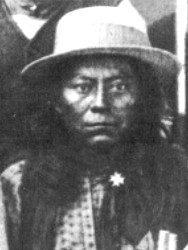
Chiquito was born in what is now Arizona, but his birth date, parents, childhood, and early experiences remain unknown. His identification as a chief nevertheless indicates that he held a position of authority among his people before entering Army service. As a leader familiar with the territory and regional military traditions, he possessed abilities that would have been especially valuable to American commanders attempting to operate in the mountains of central Arizona.
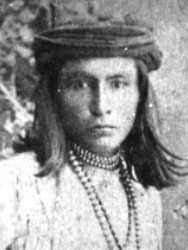
Jim “The Great”‘s background is somewhat better documented. Born around 1850, he was originally known by the Apache name Bow-os-loh and belonged to the White Mountain Apache. He later appeared in American military records simply as Jim and became known in historical accounts as Jim “The Great.” Although the surviving materials do not explain the origin of that designation, his military record establishes that he became a sergeant in the United States Army Indian Scouts, a rank reflecting responsibility within the scout organization.
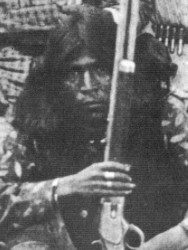
Elsatsoosh remains the least documented of the three warriors. He was born in Arizona Territory and was identified as Apache, but available military records reveal little about his family, childhood, or early life. He eventually entered the Indian Scouts and attained the rank of corporal, serving in operations associated with the 5th Cavalry Regiment. His military rank and subsequent decoration establish his recognized service, even though much of his personal history has disappeared from the surviving record.
Despite their different backgrounds, the three men shared a tradition of military knowledge developed through generations of Apache experience in the Southwest. They understood the terrain, the difficulties of travel, and the methods by which small groups could move, conceal themselves, and fight effectively in mountain country. These abilities would prove particularly important when General George Crook began reorganizing the Army’s approach to warfare in Arizona.
General George Crook and the Army’s New Strategy
When Lieutenant Colonel George Crook assumed command of the Department of Arizona, American forces faced a persistent military problem. Conventional cavalry and infantry formations could occupy forts, patrol established roads, and protect settlements, but they often struggled to locate and defeat highly mobile Indigenous fighters operating in remote mountain regions. Apache and Yavapai groups could exploit difficult terrain to avoid pursuit, establish concealed camps, and occupy defensive positions that reduced the advantages of larger military formations.
Crook recognized that success required more than additional soldiers or greater firepower. His strategy emphasized sustained pursuit, coordinated expeditions, aggressive reconnaissance, and the extensive employment of Native American scouts. Rather than relying exclusively upon conventional military tactics, he sought to use smaller, mobile detachments capable of following opponents into the rugged country where they had previously found relative security.
Native American scouts were central to this strategy. Their responsibilities extended far beyond guiding soldiers along established trails. They tracked movements across rocky ground, interpreted signs of recently abandoned camps, located water supplies, and identified concealed approaches to defensive positions. During combat operations, scouts frequently advanced ahead of the main force, exposing themselves to ambush and sudden enemy fire. Their specialized abilities gave Army commanders access to intelligence and routes that regular soldiers often could not obtain independently.
In November 1872, civilian scout Corydon Cooley recruited a group of Apache scouts at Fort Apache to support Crook’s operations in central Arizona. Historical research identifies Chiquito among the men recruited for this force. Jim and Elsatsoosh also served with the Indian Scouts during the same general campaign, with their military service associated with operations involving the 5th Cavalry Regiment. Together, they became part of an offensive designed to penetrate the mountain strongholds of groups resisting American authority.
The Army’s reliance on Apache scouts demonstrated both military practicality and the complexity of frontier alliances. These Indigenous soldiers possessed knowledge that could not easily be reproduced through conventional training, and their participation substantially improved the Army’s ability to operate in the Southwest. At the same time, they were being employed in campaigns against other Native American communities whose lives were being transformed by American expansion.
The Winter Campaign of 1872–1873
The winter of 1872–1873 marked a sustained military effort to bring armed resistance in central Arizona under federal control. Crook’s forces operated throughout the Tonto Basin and surrounding highlands, conducting expeditions into remote areas characterized by steep canyon walls, narrow trails, rocky ridgelines, and isolated mountain valleys. The terrain presented formidable logistical and tactical challenges, particularly for soldiers accustomed to conventional military operations. The Tonto Basin is a 31.13-square-mile area, framed by mountains, that is now inside the Tonto National Forest. For reference, today this area is between Phoenix and Sedona.
Army detachments frequently traveled through country where established roads were nonexistent. Pack animals carried ammunition, provisions, and equipment, but narrow mountain approaches and difficult changes in elevation restricted their movement. Water supplies were often uncertain, while winter weather at higher elevations exposed soldiers and scouts to freezing temperatures and exhausting marches. The ability to identify passable routes and sustain movement across difficult terrain could determine whether an expedition succeeded or failed.
For Apache scouts such as Chiquito, Jim, and Elsatsoosh, the campaign required constant attention to the surrounding landscape. A faint trail, disturbed stones, an abandoned campsite, or evidence of a recently extinguished fire might reveal the direction and approximate size of an opposing group. Such observations could enable Army detachments to locate concealed positions that would otherwise remain undiscovered.
The danger increased when the scouts approached enemy-held territory. Narrow canyon entrances and elevated rocky positions offered opportunities for ambush, while caves and natural defensive formations could provide protection against larger attacking forces. Scouts operating ahead of the main column might encounter armed resistance before regular soldiers were able to deploy effectively. In these circumstances, knowledge of the terrain, quick judgment, and courage under fire were essential.
Chiquito served during these operations as an Apache leader whose military abilities had already distinguished him among his people. Jim participated as a sergeant, carrying the additional responsibilities associated with noncommissioned rank. Elsatsoosh served as a corporal, combining his experience as an Apache warrior with the duties of an Army scout. Their participation placed them within one of the most demanding military campaigns conducted in the Southwest during the nineteenth century.
The Fighting in the Tonto Basin
Crook’s winter offensive consisted of numerous expeditions and engagements rather than one continuous battle. Army detachments attempted to locate Indigenous groups occupying remote defensive positions and compel their submission to federal authority. The fighting frequently occurred in terrain where small numbers of defenders could resist larger forces by occupying caves, narrow approaches, and elevated rocky positions.
One of the campaign’s most devastating engagements occurred in December 1872 at Salt River Canyon, commonly associated with the Battle of Skeleton Cave. During that operation, American forces and their Native American allies attacked a cave occupied by Yavapai people, inflicting heavy casualties. The engagement became one of the most destructive episodes of Crook’s Arizona campaign and contributed to the growing military pressure upon Indigenous communities resisting federal control.
Although Skeleton Cave illustrates the nature and consequences of the winter offensive, surviving records do not establish that Chiquito, Jim, or Elsatsoosh personally participated in that engagement. Their Medal of Honor citations recognize gallantry during the broader campaigns of 1872–1873, and the available materials do not identify particular actions at Skeleton Cave to any of the three men.
The distinction is important because nineteenth-century military records frequently documented the activities of entire commands without preserving the precise movements of individual scouts. Nevertheless, the campaign’s major engagements demonstrate the dangerous conditions under which these men served. Their military responsibilities required them to navigate difficult terrain, locate opposing forces, and participate in operations where combat could erupt suddenly and at close range.
Sycamore Canyon and the Recognition of Gallantry
Among the surviving military references to Crook’s campaign, one of the most significant concerns an engagement in Sycamore Canyon, Arizona Territory. Research compiled by the United States Army at Fort Huachuca preserves information concerning Crook’s recommendations for the Medal of Honor following the winter operations. According to that account, Chiquito was among ten Apache scouts recommended for recognition after the campaigns of 1872–1873.
The recommendations included conspicuous gallantry during a charge against Tonto Apache fighters in Sycamore Canyon. The engagement involved the recovery of a valuable herd of horses belonging to Bashford and Stevens. In nineteenth-century military operations, horses represented a critical resource, providing transportation, reconnaissance capability, and mobility for cavalry units. The loss of a substantial herd could seriously restrict a command’s ability to conduct operations across the vast distances of the Southwest.
Recovering captured horses from an armed opposing force could therefore involve significant tactical risk. A charge against fighters occupying difficult terrain required the attacking force to close rapidly with an opponent whose strength and defensive arrangements might not be fully understood. In the narrow approaches and broken landscape of Arizona’s canyon country, such an operation demanded determination and courage.
The Fort Huachuca research specifically identifies Chiquito among the scouts recommended for gallantry in connection with the Sycamore Canyon action. The broader group of recommended Apache scouts included Jim and Elsatsoosh. Other members were William Alchesay, Blanquet, Kelsay, Kosoha, Machol, Nannasaddie, and Nantaje.
This common recommendation history provides an important connection among the three men. Their service was recognized as part of the same military campaign, and they belonged to a group of Apache scouts whose conduct impressed Crook sufficiently to warrant recommendations for the nation’s highest military decoration. However, the surviving summaries do not describe the precise individual actions performed by Jim or Elsatsoosh at Sycamore Canyon, nor do they provide a detailed account of Chiquito’s movements during the charge.
The historical record therefore supports their shared association with the campaign and Crook’s recommendations, while leaving the exact circumstances of each man’s gallantry incompletely documented. Their courage was officially recognized, but the detailed battlefield narratives familiar to modern Medal of Honor recipients were not preserved.
Ten Apache Scouts Earn the Medal of Honor
Following the conclusion of the winter campaign, Crook submitted formal recommendations recognizing the gallantry of soldiers and scouts who had distinguished themselves during the operations. On June 30, 1873, he recommended that medals be awarded to ten Apache scouts and additional enlisted personnel. The recommendations remained under consideration for nearly two years before receiving War Department approval on March 30, 1875.
The ten Apache scouts included Chiquito, Jim, Elsatsoosh, William Alchesay, Blanquet, Kelsay, Kosoha, Machol, Nannasaddie, and Nantaje. Their recognition represented an extraordinary chapter in the history of Native American military service. These were Indigenous soldiers whose specialized knowledge and combat abilities had helped American forces conduct operations in territory where conventional military methods had repeatedly encountered difficulties.
On April 12, 1875, Chiquito, Jim, and Elsatsoosh received the Medal of Honor for their gallantry during the Arizona campaigns. Their official citations were identical:
Official Medal of Honor Citation
“Gallant conduct during campaigns and engagements with Apaches.”
The brevity of the citation reflects nineteenth-century military documentation practices. During that period, the Medal of Honor was the principal federal military decoration for distinguished conduct in combat, but the procedures and standards associated with the award differed from those familiar to modern servicemen. Some recipients received detailed descriptions of their individual actions, while others were recognized through short citations identifying a campaign or period of service.
Chiquito was identified in military records as a private in the Indian Scouts, notwithstanding his traditional position as an Apache chief. His Medal of Honor was presented at Fort Bowie in Arizona Territory. Jim was recognized as a sergeant, with Camp Verde identified in the Congressional Medal of Honor Society’s records as the location to which his award was accredited. Elsatsoosh received recognition as a corporal, although the available records do not establish the precise circumstances of the physical presentation of his medal.
The three decorations were awarded during the recipients’ lifetimes and permanently established their places among the Native American soldiers who earned the Medal of Honor. Their recognition also underscored the important role Indigenous scouts played in the Army’s campaigns, even as those operations contributed to the defeat and displacement of other Native American communities.
Chiquito’s Medal Reappears in the Arizona Desert
More than a century after Chiquito received the Medal of Honor, an unusual discovery brought renewed attention to his military service. During the 1980s, the star-shaped metal portion of a nineteenth-century Medal of Honor was reportedly discovered in the Arizona desert near Wheatfield. The object was identified as the planchet of Chiquito’s original decoration, bearing an inscription on its reverse that read, “The Congress to Private Chiquito, Indian Scout.”
The discovery created a historical mystery that remains unresolved. How had a Medal of Honor presented at Fort Bowie in 1875 come to rest in the Arizona wilderness? Chiquito may have lost the decoration during his lifetime, or it may have passed into the possession of a relative or another individual before disappearing. The surviving historical record provides no definitive explanation for how the medal was separated from its owner or how long it remained in the desert.
The discovery, documented in material associated with the Sharlot Hall Museum in Prescott, Arizona, is particularly significant because so little information survives concerning Chiquito’s later life. His date of death, burial location, and experiences after receiving the Medal of Honor have not been firmly established. The recovered decoration therefore represents a rare physical connection to an Apache chief whose courage was recognized by the United States Army but whose personal history largely disappeared from written accounts.
Jim “The Great” and Elsatsoosh After the Campaign
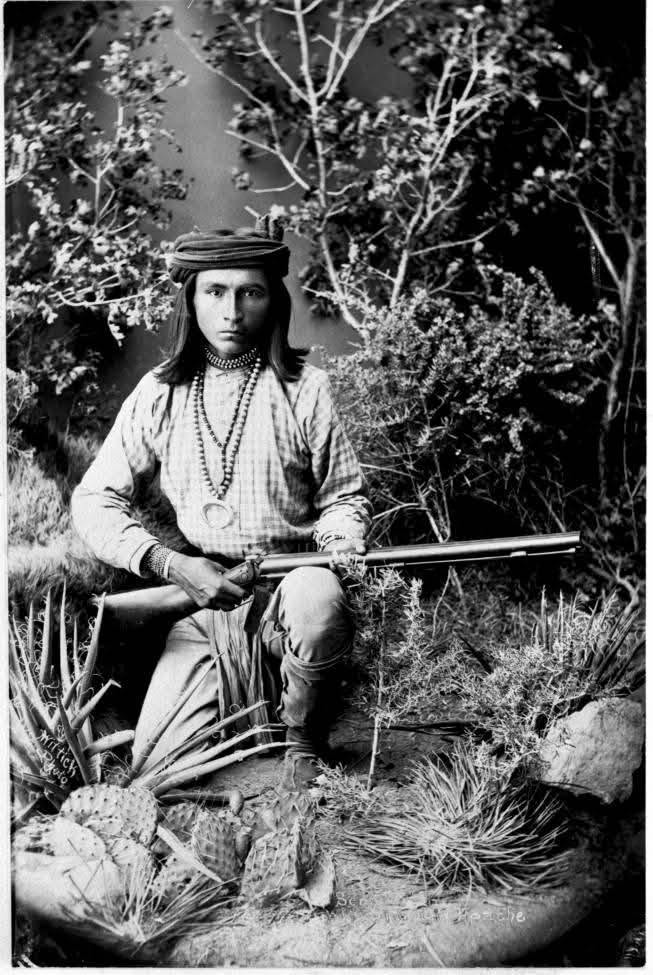
The later lives of Jim and Elsatsoosh are similarly difficult to reconstruct. Historical accounts suggest that Jim’s military service continued until approximately 1875, but relatively little documentation survives concerning his activities after leaving the Army. Some secondary sources place his death around 1897, while the Congressional Medal of Honor Society records his death in 1889 at Ash Flats, Arizona. These conflicting dates illustrate the challenges historians face when attempting to reconstruct the lives of nineteenth-century Indigenous soldiers.
One particularly interesting detail concerns a pension application reportedly submitted by Jim’s widow in 1927. Although the available summaries do not provide a complete account of the proceedings, the application suggests that his military service continued to have significance for his family decades after the Arizona campaigns. It also offers a possible avenue for further historical research into his marriage, family relationships, and later years.
Elsatsoosh’s personal history is even less complete. The available records establish his service as a corporal in the Indian Scouts, his participation in the Arizona campaigns, and his receipt of the Medal of Honor, but they do not identify his date of death, burial location, or post-service experiences. No detailed account of his family or later activities appears in the supplied biographical materials.
These gaps reflect a broader problem in the preservation of Native American military history.
About James G. Fausone, Esq.
James G. Fausone, Esq. is a partner with Legal Help For Veterans, PLLC, with over twenty years of experience helping veterans apply for service-connected disability benefits and starting their claims, appealing VA decisions, and filing claims for an increased disability rating so veterans can receive a higher level of benefits.
If you were denied service connection or benefits for any service-connected disease, our firm can help. We can also put you and your family in touch with other critical resources to ensure you receive the treatment you deserve.
Give us a call at (800) 693-4800 or visit us online at www.LegalHelpForVeterans.com.
This electronic book is available for free download and printing from www.homeofheroes.com. You may print and distribute in quantity for all non-profit, and educational purposes.
Copyright © 2018 by Legal Help for Veterans, PLLC
ALL RIGHTS RESERVED