
John Essebagger Jr.
Holland's Korean MOH Recipient
James G. Fausone
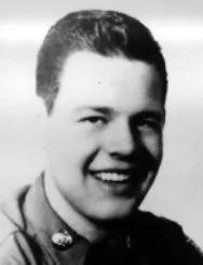
(Photo Courtesy of C. Douglas Sterner)
Few communities can claim a Medal of Honor recipient as one of their own. The city of Holland, Michigan, is exceptional in that regard. Among the heroes who called Holland home was Corporal John Essebagger Jr., a quiet young man whose extraordinary courage on a Korean hillside in April 1951 earned America’s highest military decoration. His final stand saved the lives of fellow soldiers during one of the most dangerous periods of the Korean War, demonstrating the selfless devotion that defines the Medal of Honor.
Although his life lasted only twenty-two years, John Essebagger Jr.’s sacrifice left an enduring legacy. Today he is remembered not only as a Medal of Honor recipient but also as a symbol of the character of ordinary Americans who answered their nation’s call during one of the twentieth century’s forgotten wars.
Growing Up in Holland, Michigan
John Essebagger Jr. was born on October 29, 1928, in Holland, Michigan, a thriving lakeshore community known for its Dutch heritage, hardworking families, and strong sense of civic pride. He grew up during the difficult years of the Great Depression, when many American families faced economic hardship yet relied upon close-knit neighborhoods and churches for support.
Public records indicate that he grew up at 326 West Third Street in Holland, a modest neighborhood where many working-class families lived. Like countless boys of his generation, John’s childhood was shaped by school, neighborhood friendships, church, and the expectation that young people would contribute to their families and communities.
Unfortunately, historians have uncovered relatively little information about his parents or siblings. Unlike many famous military figures, Essebagger never had the opportunity to tell his own story after the war. Because he was killed in combat at such a young age, few interviews or personal memoirs exist to provide additional details about his family life. What is known is that he came from an ordinary American household that instilled in him responsibility, discipline, and a willingness to serve others.
Education
John attended Washington Elementary School before enrolling at Holland High School. School records preserved by the Holland Museum note that his senior yearbook included the quotation:
“I walked my post in a military manner.”
The quotation, chosen years before he entered combat, proved remarkably prophetic. It reflected a young man who admired discipline, duty, and responsibility long before circumstances demanded the ultimate sacrifice.
He graduated from Holland High School in 1946, just one year after the end of World War II. America was entering a new era of prosperity, yet the international situation remained uncertain. The Soviet Union had become a rival superpower, tensions were growing in Europe and Asia, and the Cold War was beginning. The country was proud of the war that was won. The country was beginning to boom as soldiers came home, housing construction took off, men had the GI Bill to get an education, and the economy had to absorb the returning workforce as companies retooled from a wartime footing to a peacetime economy. Inflation reached 14% in 1947, and labor unrest caused strikes demanding higher wages.
Like many young men of his generation, military service remained a normal expectation of citizenship. World War II was over, and the expectation was world peace as most nations were weary and recovering.
Joining the Army
Following high school, Essebagger entered civilian life but also joined the Army Reserve. The exact nature of his employment during these years is not well documented, but like many reservists, he balanced civilian responsibilities with military training.
Everything changed on June 25, 1950, when North Korean forces invaded South Korea. Within days, the United States committed troops under the banner of the United Nations to repel the invasion. As America’s military expanded rapidly, thousands of reservists were recalled to active duty. John Essebagger Jr. was among them.
He was called to active Army service in September 1950 and soon deployed overseas. By early 1951 he had joined Company A, 1st Battalion, 7th Infantry Regiment, 3rd Infantry Division, one of the Army’s most respected combat formations.
The Korean War
Often called “The Forgotten War,” the Korean War was anything but forgotten by those who fought it. The conflict began as North Korea attempted to conquer South Korea. United Nations forces initially suffered severe setbacks before General Douglas MacArthur’s landing at Inchon dramatically reversed the situation.
However, after UN forces approached the Chinese border, hundreds of thousands of Chinese soldiers entered the war. Fighting became a brutal series of offensives and counteroffensives across steep mountains and rugged terrain.
By spring 1951, American infantry units were engaged in nearly continuous combat. The 3rd Infantry Division, including Company A, found itself defending strategic positions against repeated Chinese attacks.
On April 25, 1951, Company A occupied defensive positions near Popsudong, Korea. Its mission was critical. The company had to delay advancing Chinese forces long enough to allow another battalion to withdraw safely through its lines. Repeated enemy assaults battered the American positions throughout the day. Chinese troops attacked in overwhelming numbers, employing tactics that emphasized mass assaults supported by artillery and mortar fire.
Despite fierce resistance, Company A gradually became overwhelmed. When one particularly intense attack threatened to overrun the American right flank, portions of the defending force began withdrawing to avoid complete encirclement. At that moment, Corporal John Essebagger Jr. made the decision that would define his legacy. Rather than retreat with his comrades, he voluntarily remained behind. Alone.
A One-Man Stand
Essebagger understood exactly what remaining behind meant. His purpose was not survival. It was to buy time. From his defensive position, he poured devastating rifle fire into advancing Chinese soldiers. As enemy troops closed in, he did something few soldiers would willingly do. He left the relative protection of his foxhole.
Advancing toward the attacking force, he fired continuously while throwing grenades into enemy formations. His aggressive action shocked the attackers and disrupted their momentum. Although completely exposed to enemy fire, Essebagger continued moving forward.
Mortar shells exploded around him. Machine-gun fire swept the hillside. Still, he pressed on. His fearless attack stalled the enemy long enough for the withdrawing American squads to reach safer defensive positions. Only after accomplishing that mission was he mortally wounded. His sacrifice saved many fellow soldiers who otherwise might have been surrounded or killed.
Medal of Honor
For his extraordinary heroism, Corporal John Essebagger Jr. was awarded the Medal of Honor posthumously.
His citation reads:
Cpl. Essebagger, a member of Company A, distinguished himself by conspicuous gallantry and outstanding courage above and beyond the call of duty in action against the enemy. Committed to effect a delaying action to cover the 3d Battalion’s withdrawal through Company A, Cpl. Essebagger, a member of one of two squads maintaining defensive positions in key terrain and defending the company’s right flank, had participated in repulsing numerous attacks. In a frenzied banzai charge the numerically superior enemy seriously threatened the security of the planned route of withdrawal and the isolation of the small force. Badly shaken, the grossly outnumbered detachment started to fall back and Cpl. Essebagger, realizing the impending danger, voluntarily remained to provide security for the withdrawal. Gallantly maintaining a one-man stand, Cpl. Essebagger raked the menacing hordes with crippling fire and, with the foe closing on the position, left the comparative safety of his shelter and advanced in the face of overwhelming odds, firing his weapon and hurling grenades to disconcert the enemy and afford time for displacement of friendly elements to more tenable positions. Scorning the withering fire and bursting shells, Cpl. Essebagger continued to move forward, inflicting destruction upon the fanatical foe until he was mortally wounded. Cpl. Essebagger’s intrepid action and supreme sacrifice exacted a heavy toll in enemy dead and wounded, stemmed the onslaught, and enabled the retiring squads to reach safety. His valorous conduct and devotion to duty reflected lasting glory upon himself and was in keeping with the noblest traditions of the infantry and the U.S. Army.
Besides the Medal of Honor, Essebagger received numerous military decorations, including: Purple Heart, Combat Infantryman Badge, Korean Service Medal, United Nations Service Medal, National Defense Service Medal, and the Korean Presidential Unit Citation. These awards recognize both his combat service and the distinguished performance of his unit.
Returning Home
Although John never returned alive, Holland welcomed its fallen hero home with honor. He was buried in Pilgrim Home Cemetery in Holland, Michigan. His grave remains a place where veterans, students, and visitors pay tribute to a young man whose courage has never been forgotten.
Tiny Holland, Michigan of 34,000 people occupies a unique place in American military history. The city has been home to four Medal of Honor recipients, making it one of only a handful of American communities with such a distinction.
The Holland Museum has highlighted Essebagger’s story as part of its effort to preserve the city’s military heritage. Exhibits and educational materials remind new generations that extraordinary courage often comes from ordinary citizens.
Conclusion
Corporal John Essebagger Jr.’s life was brief but profoundly meaningful. Born and raised in Holland, Michigan, educated in its public schools, and recalled from the Army Reserve to serve during the Korean War, he embodied the ideals of duty and sacrifice. On April 25, 1951, near Popsudong, he chose to remain behind and fight alone against overwhelming enemy forces so that his fellow soldiers could escape. That selfless act cost him his life but saved many others and earned him the Medal of Honor, awarded posthumously in 1952.
Today, his grave at Pilgrim Home Cemetery, his Medal of Honor citation, and the historical exhibits maintained by the Holland Museum ensure that his story continues to inspire. Though many details of his private life have been lost to history, what remains is more important: the record of a young American who, in the nation’s hour of need, displayed uncommon valor and fulfilled the highest ideals of military service. His name endures not because he sought fame, but because his courage, sacrifice, and devotion to his comrades exemplify the very meaning of the Medal of Honor.
About James G. Fausone, Esq.
James G. Fausone, Esq. is a partner with Legal Help For Veterans, PLLC, with over twenty years of experience helping veterans apply for service-connected disability benefits and starting their claims, appealing VA decisions, and filing claims for an increased disability rating so veterans can receive a higher level of benefits.
If you were denied service connection or benefits for any service-connected disease, our firm can help. We can also put you and your family in touch with other critical resources to ensure you receive the treatment you deserve.
Give us a call at (800) 693-4800 or visit us online at www.LegalHelpForVeterans.com.
This electronic book is available for free download and printing from www.homeofheroes.com. You may print and distribute in quantity for all non-profit, and educational purposes.
Copyright © 2018 by Legal Help for Veterans, PLLC
ALL RIGHTS RESERVED