
Mary Louise Hawkins
Distinguished Flying Cross
James G. Fausone
In an age when men and women were recognized as having different roles in society and thus different recognitions, the Distinguished Flying Cross awarded to Mary Louise Hawkins is noteworthy. She was a nurse in WWII. Mary Louise Hawkins was not just a nurse, but a fearless and courageous health care provider focused on duty and her patients.
Shortly after earning her nursing degree from the Highland School of Nursing in Oakland, California, in 1942, she joined the Army Nurse Corps (ANC). Mary Louise Hawkins was born on May 24, 1921 at Fitzsimmons Army Hospital in Denver, Colorado. By the age of three, her family had lived for a time in the Philippines, due to her father’s military assignment; they returned to Colorado in 1924. Eventually, Mary grew up in California where she trained for nursing. The Highland School of Nursing a/k/a Highland General Hospital School of Nursing was a diploma-type nursing program in the East Bay area of the San Francisco Bay Region.
The typical nursing curricula of that era included foundational courses in anatomy/physiology, medical-surgical nursing, obstetric and pediatric nursing, and clinical rotations in affiliated hospitals. The wartime context accelerated many nursing programs to meet the demand for trained nurses. For Mary, graduating in 1942 meant she was prepared and eligible to enlist in the U.S. Army Nurse Corps and enter the specialized training for flight nurses shortly thereafter.
Growing up in a military family and living abroad early gave her a global mindset and resilience that likely helped in her later wartime service.
Her training at Highland School of Nursing placed her among the professional nurses whose education enabled them to step into the high-risk role of flight nurse in WWII—a role requiring rapid decision-making, technical skill, and adaptability in extreme conditions.
Wait, the DFC is for men who fly! No. It’s for individuals for heroism or extraordinary achievement while participating in aerial flight.
The criteria include:
Heroism: Actions must involve voluntary action above and beyond the call of duty, in the face of danger, and well above the actions of others under similar circumstances.
Extraordinary Achievement: The achievement must be so exceptional that it clearly sets the individual apart from their peers.
The DFC was established on July 2, 1926, and the first award was given to Captain Charles A. Lindbergh for his solo flight across the Atlantic in 1927. Amelia Earhart became the first woman to receive the DFC on July 29, 1932, when it was presented to her by Vice President Charles Curtis in Los Angeles for her solo flight across the Atlantic Ocean earlier that year. Eventually, it was limited to military personnel by an Executive Order.
The first Distinguished Flying Cross (DFC) awarded to a nurse was to 1st Lt. Aleda Lutz during World War II. She became the first woman to receive the DFC in war for her distinguished service as a flight nurse during the evacuation of casualties from the front lines. She flew 196 missions before her last on November 1, 1944. She was the first American servicewoman to be killed in combat during World War II and is recognized for her extraordinary achievements as a flight nurse during the war.
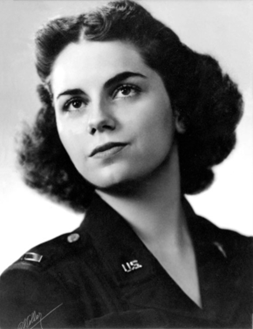
Nurse Hawkins received it for her actions on September 24-26, 1944. In late September 1944, Flight Nurse Mary Louise Hawkins, serving with the 801st Medical Air Evacuation Squadron, was assigned to accompany a C-47 “Skytrain” evacuation flight in the South Pacific. Her crew’s mission was to evacuate 24 wounded Marines from the Palau Islands (specifically, Peleliu, where brutal fighting had erupted) to Guadalcanal, over 1,000 miles away.
On September 24, 1944, while en route, the C-47 ran dangerously low on fuel due to unexpected headwinds. The pilot, Lt. Robert F. Lang, was forced to make an emergency landing on Bellona Island, a small coral island in the Solomon chain. During the crash landing, one of the propellers sliced through the fuselage, injuring several aboard. Most gravely, a Marine patient’s trachea was severed by debris, leaving him unable to breathe. Hawkins, though badly shaken herself, immediately took charge of the situation. The aircraft was damaged, supplies were scattered, and no doctor was on board — only she and the wounded.
Demonstrating remarkable calm and ingenuity, Hawkins improvised an emergency tracheotomy using what little equipment she had. She removed the inflation tube from a “Mae West” life jacket, using it as a makeshift suction tube. She personally cleared blood and debris from the man’s airway using suction and manual pressure. She maintained the patient’s airway for 19 continuous hours, keeping him alive until a rescue party arrived the following day.
Despite the tropical heat, lack of sterilization, and limited medical tools, she prevented infection, stabilized all 24 wounded men, and ensured every single patient survived the ordeal.
Her heroic composure, surgical skill, and courage under duress became one of the most famous examples of WWII flight nursing valor. She was later cited as an example of “steadfast courage” by both the Army Air Forces Air Transport Command and the Surgeon General’s Office. Her actions are permanently memorialized in the U.S. Air Force Nursing Heritage Display at the National Museum of the U.S. Air Force (Wright-Patterson AFB, Ohio).
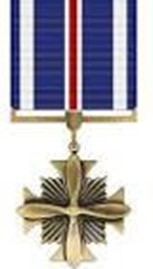
Her DFC citation reads:
“The President of the United States of America, authorized by Act of Congress, July 2, 1926, takes pleasure in presenting the Distinguished Flying Cross to First Lieutenant (Nurse Corps), [then Second Lieutenant] Mary Louise Hawkins (ASN: N-737974), United States Army, for extraordinary achievement while participating in aerial flight while serving with the Air Transportation Command as Flight Nurse in charge of patients of a crashed evacuation airplane on Bellona Island, Solomons Group, on 26 September 1944.
First Lieutenant Hawkins displayed unusual courage in rendering prompt and efficient first-aid treatment to an injured passenger immediately after the accident. Examination of the patients extricated with her from the wreckage disclosed that a wounded Marine Corps enlisted man had suffered throat injuries in the crash and was threatened with death by asphyxiation.
Although badly shaken by the crash, First Lieutenant Hawkins performed an emergency operation, enabling the patient to breathe and thereby saving his life. Her immediate performance of technically difficult acts despite the stress incident to the crash landing of the airplane is an example of steadfast courage which reflects great credit on herself and the Army Nurse Corps.”
Like so many women of that time, upon honorable discharge in 1946, she went back to “normal” life. She later pursued graduate education and a civilian nursing career, but her WWII service remained the highlight of her professional legacy.
About James G. Fausone, Esq.
James G. Fausone, Esq. is a partner with Legal Help For Veterans, PLLC, with over twenty years of experience helping veterans apply for service-connected disability benefits and starting their claims, appealing VA decisions, and filing claims for an increased disability rating so veterans can receive a higher level of benefits.
If you were denied service connection or benefits for any service-connected disease, our firm can help. We can also put you and your family in touch with other critical resources to ensure you receive the treatment you deserve.
Give us a call at (800) 693-4800 or visit us online at www.LegalHelpForVeterans.com.
This electronic book is available for free download and printing from www.homeofheroes.com. You may print and distribute in quantity for all non-profit, and educational purposes.
Copyright © 2018 by Legal Help for Veterans, PLLC
ALL RIGHTS RESERVED
OUR SPONSORS