
Jordan M. Byrd
Combat Medic Who Sacrificed His Life For Another
James G. Fausone
On October 13, 2010, nineteen-year-old Army medic Jordan Matthew Byrd made a decision that defined the very highest ideals of military service. Under intense enemy fire in Afghanistan’s Paktika Province, he raced across an open field to reach a wounded fellow soldier. He successfully treated the casualty, but in doing so exposed himself to deadly enemy fire and was mortally wounded.
For his extraordinary gallantry, Byrd was posthumously awarded the Silver Star, the nation’s third-highest award for valor in combat. His story is not simply one of battlefield heroism. It is the story of a Wyoming-born and Utah-raised young man whose life revolved around family, service, faith, and an unwavering desire to help others. Though his life lasted less than twenty years, the impact of his sacrifice continues to resonate among his family, fellow soldiers, and the nation he served.
Early Life and Family Roots
Jordan Byrd spent his early years connected to family roots in Wyoming before growing up primarily in northern Utah. Like many young men raised in the Mountain West, he developed a strong sense of independence, self-reliance, and commitment to community.
Jordan was born November 16, 1990, in Cody, Wyoming. Jordan attended school in Tooele County, Utah, graduating from Dugway High. It is located about 90 miles southwest of Salt Lake City and the Onagui Mountain Range to the east of Dugway dominates the local geography.
The high school, established in 1953 as part of K-12 facilities, was located inside the Dugway Proving Grounds. Dugway was officially activated by the War Department on March 1, 1942, as a Chemical Warfare Range. Over the years, the proving ground underwent various name changes and periods of deactivation and reactivation. In 1943, the Army established biological warfare and testing facilities at Dugway. In 1954, Dugway Proving Ground was confirmed as a permanent installation. In July 1955, Dugway was re-designated as a Class III installation and given additional land. In 1958, the United States Army Chemical Corps School for Chemical, Biological, and Radiological Weapons moved from the Army Chemical Center in Aberdeen Proving Ground, Maryland to Dugway Proving Ground.
In 1973, Dugway Proving Ground became part of U.S. Army Test & Evaluation. In 2005, DPG was designated as a Major Range and Test Facility Base (MRTFB). In 2006, the Installation Management Command (IMCOM) was activated with a mission to provide effective, efficient, and equitable management; integrate cost and energy saving measures; promote new technology; synchronize, integrate, and deliver installation services and sustain facilities to support mission readiness and execution; enable the well-being of Soldiers, Civilians, and Family members; and create a ready and resilient community environment.
In 2015, after decades of operating in the aging, cold-war-era facility, a brand new, highly secure 72,000-square-foot facility was built. The project combined the elementary and high schools into a single, specialized K-12 campus designed to meet rigorous anti-terrorism and safety standards.
In high school, Byrd was Senior Class President, a member of the National Honor Society, and played baseball and was on the wrestling team. His #7 baseball jersey was retired and the ball diamond renamed in his honor in 2012.
Family members consistently described Jordan as a protector. Long before he wore an Army uniform, he displayed instincts that would later define his service as a combat medic. According to his stepfather, Scott Pitt, Jordan was the type of person who “always stuck up for others” and defended those who could not defend themselves.
The Byrd family settled in Grantsville, Utah, a close-knit community west of Salt Lake City. The city was rather small then with a population of about 5000 people. Today, it is primarily known for its distinct blend of rich pioneer heritage, rapid modern growth, and major motorsports venues. But in that rural environment, Jordan developed strong family ties and friendships that would remain central throughout his life.
Jordan’s mother remarried. Jordan M. Byrd’s family had strong professional ties to the military community where he grew up. His stepfather (Scott Pitt) worked directly at the Dugway Proving Ground as a Quality and Safety Manager. His role on the installation is what brought the family to live on the secure base, allowing Jordan to attend and graduate from Dugway High School. His mother (Roberta Pitt) heavily supported her son’s path toward medicine and military service. His biological father (Justin Brost) resided in Wyoming, where Jordan was born, and later became a strong advocate for the Fallen Hero program, which established local scholarships in Jordan’s memory.
Those who knew him remember a young man who was energetic, outgoing, and deeply loyal. He enjoyed the outdoors, spending time with friends, and participating in the activities common to many Utah teenagers. Yet beneath his youthful personality was a serious desire to build a meaningful future.
Family members later recalled that Jordan possessed a natural tendency to care for others. Whether helping friends, assisting family members, or stepping in when someone needed support, he routinely placed the needs of others before his own. Looking back after his death, many relatives saw those qualities as early indicators of the medic he would become.
Education and College Studies in Utah
Jordan graduated in 2009, two months early, and was attending classes at the University of Utah when he chose to join the U.S. Army to advance his future in the medical field. Following high school, Jordan pursued higher education in Utah. Like other young adults trying to determine their future path, he balanced educational aspirations with a growing desire to serve his country.
His college studies exposed him to subjects related to health care and public service. He had a long-term goal of being a doctor. Friends and family observed that he was drawn toward careers involving helping people directly. The combination of education, maturity, and a desire to make a difference increasingly pushed him toward military service.
The attacks of September 11 and the ongoing wars in Iraq and Afghanistan had shaped the worldview of Jordan’s generation. Young Americans entering adulthood during the late 2000s witnessed service members deploying repeatedly to combat zones. Many felt a sense of responsibility to contribute. Jordan was among them. While attending college in Utah, he began considering military service not simply as a career option but as a calling. He wanted challenge, purpose, and an opportunity to serve something larger than himself. That decision would ultimately place him on a path toward one of the most demanding and respected roles in the Army—the combat medic.
Choosing the Army
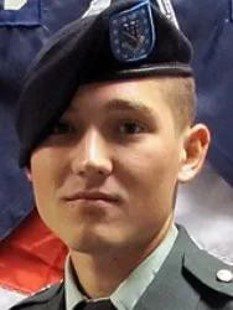
In September 2009, Jordan enlisted in the United States Army. For many young soldiers, enlistment represents a major transition. For Jordan, it was also a commitment to service and sacrifice. He chose a specialty that reflected his personality and values: combat medic.
Combat medics occupy a unique place within military units. They are warriors and healers simultaneously. They train to fight alongside infantry soldiers while also mastering emergency medicine. Their mission is simple but extraordinarily difficult—to save lives in the most dangerous environments imaginable.
The role demands courage because medics often move toward danger rather than away from it. When a soldier is wounded, the medic must reach that casualty regardless of enemy fire, terrain, or personal risk. Jordan embraced that responsibility.
After completing basic training and advanced medical training, he earned the qualifications necessary to serve as a combat medic. Fellow soldiers quickly recognized his professionalism and competence. He became known as “Doc,” the affectionate title infantry soldiers often give trusted medics.
By April 2010, he had arrived at Fort Campbell, Kentucky, home of the famed 101st Airborne Division (Air Assault). He was assigned to Company A, 1st Battalion, 506th Infantry Regiment, part of the 4th Brigade Combat Team. The battalion traced its lineage to the legendary “Currahees” of World War II, immortalized in books and television for their service with the 101st Airborne. Jordan was proud to join that storied organization. Currahee has been the nickname for the 506th since 1942. It pays homage to Mount Currahee in George near Army Camp Toccoa and originates from the Cherokee word meaning “Stand Alone.”
Marriage and Fatherhood
While building his Army career, Jordan experienced two of the most important events of his life: marriage and fatherhood.
He married Savanna Small on December 21, 2009, beginning a new chapter filled with optimism and plans for the future. Their time together as husband and wife would be tragically brief, but it was filled with hope. Both were from Tooele County.
In 2010, as his deployment approached, the couple eagerly awaited the birth of their first child. The Army delayed Jordan’s deployment by approximately a week so he could witness the birth of his son, Ayden. That decision gave Jordan one of the greatest gifts of his life. He was able to hold his newborn son, spend precious days with his family, and begin experiencing fatherhood before leaving for Afghanistan.
Family members later recalled that he spent only about a week with Ayden before departing overseas. The photographs from those days would become cherished treasures for his wife and family. Like countless military families throughout American history, the Byrds faced deployment with both pride and anxiety. They understood the risks, but they also believed in the mission Jordan had chosen.
Deployment to Afghanistan
In September 2010, Jordan was to deploy to Afghanistan with the 101st Airborne Division. This would be his first combat medic deployment. His enlistment in September 2009 was followed by combat medic training at Fort Sam Houston. He arrived at Fort Campbell, Kentucky, in April 2010, and five months later was off to Afghanistan after the birth of his son in September 2010. In just a short year, his life changed so much but was to tragically be cut short.
Jordan’s unit operated in Paktika Province, a region known for rugged terrain, insurgent activity, and frequent attacks against coalition forces. For infantry soldiers conducting patrols in the province, every mission carried significant danger. Ambushes, sniper attacks, improvised explosive devices, and coordinated assaults were common. As a combat medic, Jordan’s responsibility was clear: accompany patrols and provide immediate lifesaving care whenever soldiers were wounded.
The war had entered its ninth year. American forces were engaged in some of the most intense combat of the conflict, particularly in eastern Afghanistan along the border with Pakistan. He had been in Afghanistan less than a month when events unfolded that would cement him in military history.
October 13, 2010
On October 13, 2010, Jordan’s platoon was conducting dismounted operations in the Yahya Khel District of Paktika Province. The patrol moved through open terrain under the constant threat of enemy attack.
During the operation, Specialist Adam Sustaita, an infantryman, was struck in the leg by enemy fire believed to have come from a sniper. Almost immediately, the patrol came under heavy enemy attack involving small-arms fire, rocket-propelled grenades, and mortar fire.
The situation rapidly became chaotic and dangerous. Many soldiers might have sought cover and waited for the firefight to subside before moving. Jordan Byrd did the opposite. Recognizing that a wounded soldier needed immediate medical attention, he ran across an open field directly into the danger zone. His actions embodied the medic’s creed.
That creed reads:
My task is to provide to the utmost limits of my capability the best possible care to those in need of my aid and assistance.
To this end I will aid all those who are needful, paying no heed to my own desires and wants; treating friend, foe and stranger alike, placing their needs above my own.
To no man will I cause or permit harm to befall, nor will I refuse aid to any who seek it. I will willingly share my knowledge and skills with all those who seek it.
I seek neither reward nor honor for my efforts for the satisfaction of accomplishment is sufficient.
These obligations I willingly and freely take upon myself in the tradition of those that have come before me.
These Things I (We) Do So That Others May Live.
Combat Medics never stand taller than when they kneel to treat the wounded!
Saving Lives in the midst of utter chaos!
Ignoring the enemy fire around him, Jordan reached Sustaita and began treatment. Working with purpose and professionally despite the chaos, he applied a tourniquet to stop the bleeding and stabilize the wounded soldier.
Years later, Sustaita would remember those moments vividly. “Within minutes after I was hit, Doc Byrd was by my side,” he recalled. Jordan succeeded in saving his fellow soldier’s life. But while providing that aid, he himself became a target. Enemy fire struck Byrd as he treated Sustaita. Despite the efforts of those around him, the wounds proved fatal. Jordan died on the battlefield at just nineteen years old. The soldier he saved survived. Jordan did not.
Military history contains many examples of medics risking their lives for others, but Jordan Byrd’s actions stand out because they represented pure selflessness. He was under no illusion about the danger. As a trained combat medic, he understood exactly what crossing that open field meant. He knew enemy forces were actively engaging his unit. He knew he could be shot. Yet he went anyway. His decision reflected a fundamental principle shared by military medics throughout American history: wounded soldiers cannot wait. Seconds matter. Lives depend on immediate action. Jordan chose another soldier’s life over his own safety. That choice ultimately cost him everything.
The Silver Star
For his actions on October 13, 2010, Jordan Byrd was posthumously awarded the Silver Star.
The Silver Star is awarded for gallantry in action against an enemy of the United States. It ranks just below the Medal of Honor and the Distinguished Service Cross among combat valor awards. The award recognized extraordinary courage under direct enemy fire.
On August 25, 2011, more than four hundred family members, friends, soldiers, and military leaders gathered at Fort Campbell to honor Jordan’s sacrifice. During the ceremony, Army leaders presented the Silver Star to his family. Receiving the award were his wife, Savanna Byrd, son Ayden, mother Roberta Pitt, and stepfather Justin Brost.
For Jordan’s family, the Silver Star represented both immense pride and profound grief. No medal could replace the son, husband, and father they had lost. Yet the award ensured that his actions would never be forgotten.
Private First Class Byrd’s Silver Star citation reads:
The President of the United States of America, authorized by Act of Congress July 9, 1918 (amended by an act of July 25, 1963), takes pride in presenting the Silver Star (Posthumously) to Private First Class Jordan Matthew Byrd, United States Army, for gallantry in action against the enemy as a Combat Medic with the 1st Battalion, 506th Infantry Regiment, 4th Brigade Combat Team, 101st Airborne Division on 13 October 2010. While on patrol, his element came under intense small arms, rocket propelled grenade and mortar fire. With complete disregard for his own personal safety, he maneuvered through the enemy kill zone across 30 meters of open terrain to render lifesaving aid to a fellow comrade. Private First Class Byrd’s distinctive accomplishments are in keeping with the finest traditions of military service and reflect great credit upon himself, Task Force Red Currahee, Combined Task Force Currahee, Combined Joint Task Force – 101 and the United States Army.
NARRATIVE TO ACCOMPANY AWARD:
Private First Class Jordan Matthew Byrd distinguished himself through heroism and gallantry in action against an enemy of the United States as a Combat Medic for 4th Platoon, Able Company, 1st Battalion, 506th Infantry Regiment, 4th Brigade Combat Team, 101st Airborne Division (Air Assault). Without regard to his own personal safety, Private First Class Byrd maneuvered across 30 meters of open ground under fire to provide medical aid and shield a wounded comrade. On 13 October 2010, Private First Class Byrd and his platoon were conducting an air assault in Kalanar, Yahya Khei District, Patika Province, Afghanistan, as part of Operation TALASHI KHMAR, a company cordon and search when their lead element came under intense enemy small arms fire. Private First Class Byrd and his platoon were tasked with establishing the outer cordon, requiring them to establish security in one of the most hostile areas in the Battalion’s area of operations. During the initial barrage, Specialist Sustaita was struck in the leg with small arms fire. One of the platoon’s sections immediately returned fire to suppress the enemy and gain fire superiority. Private First Class Byrd, with total disregard for his own safety, ran through the enemy kill zone, crossing approximately 30 meters of open terrain with rounds impacting around him to provide medical treatment on Specialist Sustaita. Despite accurate enemy sniper, AK-47, PKM, RPG, and mortar fire, Private First Class Byrd continued the treatment of the injured Soldier, putting himself between the enemy fire and the casualty, in order to provide life-saving treatment to the Soldier. As 4th Platoon’s section exchanged fire, the enemy began to employ 82-mm. mortars which impacted within 75 meters of their position. The accuracy and volume of enemy fire, coupled with the lack of cover and concealment, pinned down the section and prevented it from reaching Private First Class Byrd and Specialist Sustaita. Private First Class Byrd shielded the casualty despite the accuracy and volume of enemy fire, and placed a tourniquet on Specialist Sustaita’s wounded leg, which proved to be life-saving. After several minutes of being exposed, Private First Class Byrd was expertly working to stop the arterial bleeding in Specialist Sustaita’s leg when he was fatally wounded. Private First Class Byrd’s immediate medical attention to Specialist Sustaita likely saved his life. Despite accurate enemy fire, he displayed selfless service and distinguished gallantry crossing 30 meters of open terrain despite heavy contact in order to apply life-saving medical care on a fellow Soldier while using his own body as a shield. Private First Class Byrd inspired his fellow Soldiers through his heroic and selfless act and is fully deserving of the Silver Star for his gallantry under fire. Private First Class Byrd’s actions are in keeping with the finest military traditions and reflect distinct credit upon himself, this Command, and the United States Army.
Remembered by His Fellow Soldiers
One of the most powerful aspects of Jordan’s legacy comes from the soldiers who served alongside him.
When family members traveled to Fort Campbell for the Silver Star ceremony, they met many of the men who had known and served with Jordan. They also met the soldier whose life he saved. Those conversations revealed stories that the family had never heard. Relatives learned that Jordan’s heroism extended beyond the final moments of his life. Fellow soldiers described numerous instances in which he had cared for others, put himself at risk, and demonstrated exceptional professionalism as a medic.
His reputation among the Currahees was that of a dependable medic who could be trusted in the worst circumstances. He treated three other soldiers that day before his final actions. For infantry soldiers, that trust is invaluable. Every soldier wants confidence that if he is wounded, someone will come for him. Jordan was exactly that kind of medic.
The Impact on His Family
Jordan’s death devastated those closest to him. His wife faced life as a widow before their first wedding anniversary. His son would grow up knowing his father primarily through photographs, stories, and the memories preserved by family members. His parents, stepparents, relatives, and friends were forced to confront a loss that seemed impossible to comprehend.
Family members repeatedly spoke of their pride in Jordan’s service while also acknowledging the pain of losing him. His aunt, Jodi Steinfeldt, described how the grief did not simply disappear with time. Instead, each passing holiday became a reminder of his absence.
Yet even amid that grief, family members emphasized the values Jordan embodied. They remembered his humor. They remembered his loyalty. Most importantly, they remembered his willingness to help others. Those qualities defined him long before Afghanistan and continued to define how he was remembered afterward.
Legacy of Courage
To ensure Jordan’s legacy would continue, a scholarship was established in his honor through the Tooele School District. Scholarships serve as powerful memorials because they transform tragedy into opportunity. Young people pursuing education and service can benefit from a legacy created by someone who gave everything for others. The scholarship helps preserve Jordan’s memory while encouraging future generations to pursue lives of purpose and service.
On March 1, 2001, the Spc. Jordan Byrd Trauma Center in Afghanistan was named in his honor.
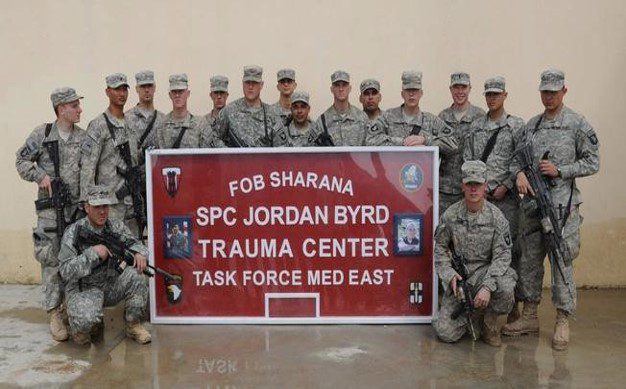
Jordan Byrd’s life was brief, but its significance cannot be measured by years alone. He was a son, husband, father, student, soldier, and medic. He came from a family rooted in the values of the American West, studied in Utah, answered the call to military service, and volunteered for one of the Army’s most demanding occupations.
He ran toward danger because someone needed help. The soldier he treated survived. Jordan did not.
In an era often measured by achievement and recognition, Jordan Byrd’s legacy reminds us that true heroism is often found in a single decision—to place another person’s life above one’s own. That decision earned him the Silver Star and a place in Utah and Army history.
About James G. Fausone, Esq.
James G. Fausone, Esq. is a partner with Legal Help For Veterans, PLLC, with over twenty years of experience helping veterans apply for service-connected disability benefits and starting their claims, appealing VA decisions, and filing claims for an increased disability rating so veterans can receive a higher level of benefits.
If you were denied service connection or benefits for any service-connected disease, our firm can help. We can also put you and your family in touch with other critical resources to ensure you receive the treatment you deserve.
Give us a call at (800) 693-4800 or visit us online at www.LegalHelpForVeterans.com.
This electronic book is available for free download and printing from www.homeofheroes.com. You may print and distribute in quantity for all non-profit, and educational purposes.
Copyright © 2018 by Legal Help for Veterans, PLLC
ALL RIGHTS RESERVED